

The Land Is the Budget: Why Waiting on Site Feasibility Costs Peace of Mind
📌 Key Takeaways
Site feasibility protects the dream by showing how the land may shape the home, budget, and design.
Start With Land: The lot should guide design before plans, costs, and family expectations feel fixed.
Unknowns Add Stress: Driveways, septic, slope, utilities, and drainage can change the budget late.
Ask Earlier Questions: Early site review helps families sort real concerns from vague worry.
Budget Lives Onsite: Foundation, access, and infrastructure decisions can matter as much as finishes.
Builder Clarity Helps: A property-based discovery meeting connects the dream to real site limits.
Let the land speak before the floor plan gets too emotional to change.
Families buying land for a custom Hill Country home will gain clearer planning confidence here, preparing them for the detailed overview that follows.
~ ~ ~ ~ ~ ~ ~ ~ ~ ~ ~ ~ ~ ~ ~ ~ ~ ~
The lot looks perfect.
Survey papers sit beside inspiration photos and handwritten budget notes on the kitchen island. A laptop glows with saved images of limestone fireplaces, long porches, glass walls, and a pool aimed toward the view.
You love the land. You can already picture the house. Still, one quiet thought keeps returning: What if the land changes everything?
That feeling is not indecision. It is your instincts asking for better information.
Before floor plans begin to feel final, site feasibility gives your family a calmer way to talk about the property, the budget, and the dream itself. It does not shrink the vision. It helps protect it.
The Real Problem: The Lot Feels Exciting, but the Unknowns Keep Growing
A Spicewood lot can feel like the beginning of everything. The view is there. The trees are there. The idea of outdoor living, a pool, a long driveway, or a private guest suite starts to feel real.
Then the questions arrive.
Can the driveway work where you imagined it? Will the septic location affect the pool? Does the slope change the foundation approach? Will utilities, drainage, HOA rules, or permitting affect the layout? These are not small details. They can shape how the home lives, how it is designed, and how confident your family feels about the budget.
The hard part is that waiting can feel responsible. You may think, Let’s not overcomplicate this yet. In reality, waiting sometimes gives the unknowns more power. The design gets more emotional. The assumptions get harder to unwind. The family conversation gets heavier.
That is where site feasibility matters.
The Hidden Costs of Assuming a Flat Lot
Site feasibility should happen before custom home design because the land can affect the home’s layout, driveway, foundation approach, utilities, septic, drainage, outdoor living areas, view orientation, and budget expectations. Early feasibility review helps your family discuss real site conditions before becoming emotionally attached to plans the property may not support.
That does not mean every question must be fully answered on day one. Some issues require surveyors, engineers, septic professionals, permitting offices, HOA review, or other qualified experts. The point is simpler: your first design conversations should be grounded in the land’s realities.
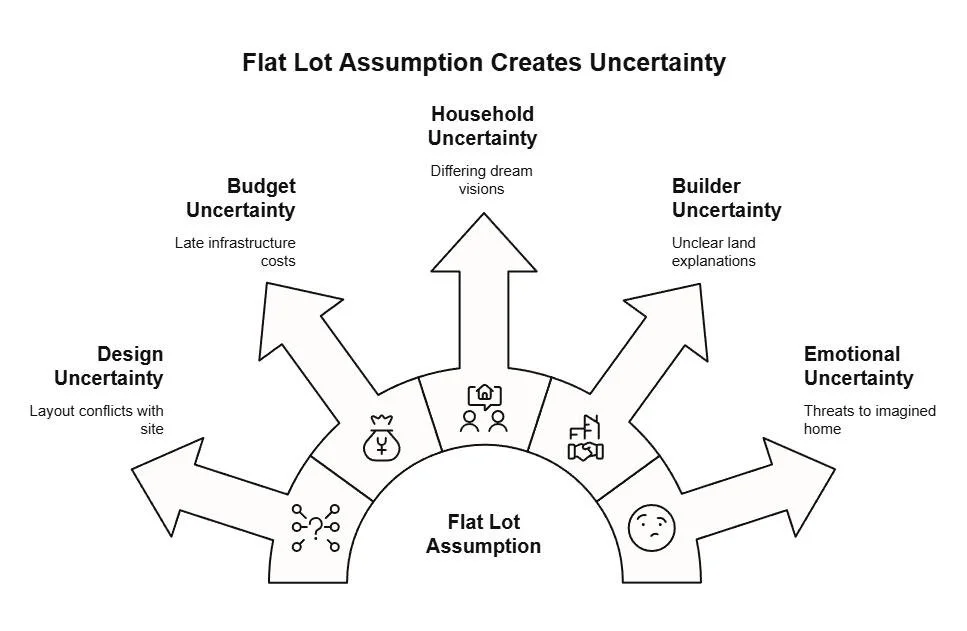
Waiting too long can create several kinds of uncertainty:
Design uncertainty: the plan may assume a layout the site makes difficult.
Budget uncertainty: infrastructure, access, drainage, or foundation needs may appear late.
Household uncertainty: family members may picture different versions of the same dream.
Builder uncertainty: you may not know whether a builder can explain the land clearly.
Emotional uncertainty: every new question can feel like a threat to the home you imagined.
The cost is not just financial. It is the mental strain of making a major decision without knowing which assumptions are safe.
The land is not a detail after design; it is one of the first budget conversations.
The Land Questions That Can Quietly Become Budget Questions
A good site-first conversation does not ask you to become a construction expert. It gives you better questions to bring to the right professionals.
For Hill Country and Lake Travis-area lots, these are common feasibility categories to discuss before design momentum builds:
Buildable area: Where can the home reasonably sit? A beautiful lot may still have setbacks, easements, trees, slope, drainage paths, or HOA limits that affect the usable building area.
Driveway and access: A driveway is not just a line on a plan. Grade, turning space, garage placement, guest parking, and construction access can influence the home’s position and cost.
Slope, rock, and foundation approach: Hill Country terrain can affect how the home meets the land. A sloped site may call for different foundation, grading, or retaining-wall conversations than a flatter lot.
Utilities and infrastructure: Water, power, internet, propane, and other service connections should be discussed early. Infrastructure requirements can affect both design and budget expectations.
Septic or wastewater planning: If a property requires an on-site sewage facility, permitting and approved plans may become part of the feasibility conversation. The Texas Commission on Environmental Quality provides general OSSF permitting guidance, and the LCRA On-Site Sewage Facilities Program may be relevant for certain Lake Travis and Highland Lakes properties.
Drainage and grading: Water needs a safe path away from the home. As a general building principle, proper grading and drainage help protect foundations and site performance; the Building America Solution Center provides general guidance on grading slopes away from foundations.
Floodplain and permitting questions: Some properties may need additional review if floodplain development rules apply. FEMA defines a floodplain development permit as a local authorization tied to development in a floodplain. Requirements vary by property and jurisdiction.
View orientation and outdoor living: The best view is not always the only design driver. Sun exposure, privacy, wind, pool placement, porch depth, and indoor-outdoor flow all need to work together.
That list can feel like a lot. It is also the reason early clarity feels so different from late-stage surprise.
A Household Conversation Guide: Known / Unknown / Ask the Builder
Before design decisions harden, your family can use a simple table to sort excitement from uncertainty. The goal is not to solve every site issue at the kitchen island. The goal is to stop vague worry from running the conversation.
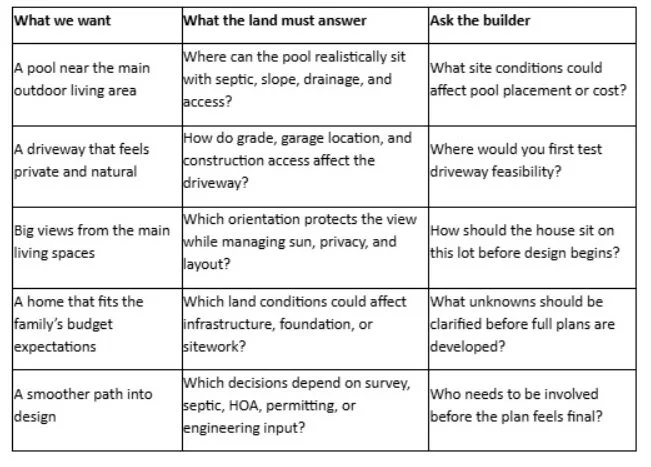
This conversation helps your family move from “something might go wrong” to “these are the questions we need answered.”
That is a better place to begin.
How a Builder-Led Discovery Meeting Protects the Dream
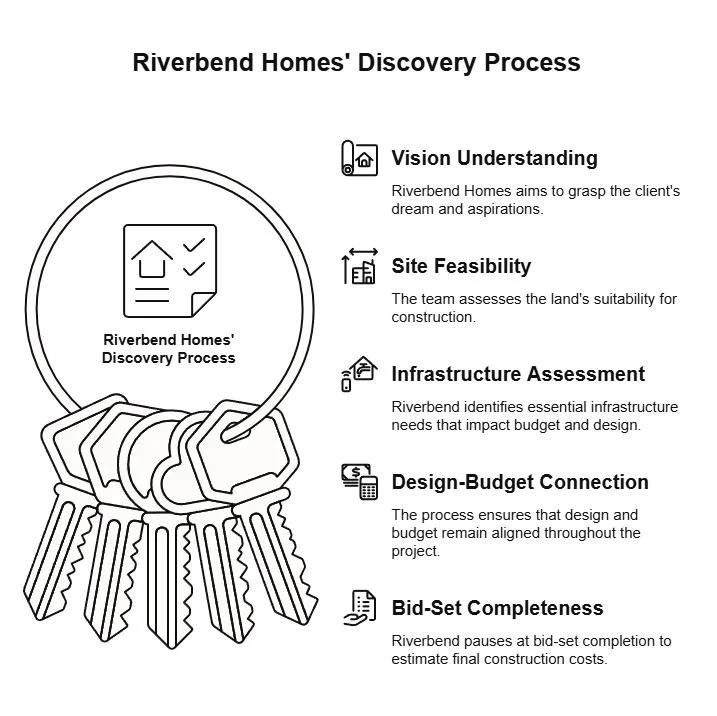
Riverbend Homes begins with a Discovery Meeting at the property. The purpose is to understand your vision, assess the site’s feasibility, and identify infrastructure requirements that may affect budget and design.
That sequence matters. A property-based conversation connects the dream to the land before the design gets too far ahead of the facts.
Riverbend’s process then keeps design and budget connected. After the initial discovery work, the team stays involved through design, then pauses at bid-set completeness to estimate final construction costs before plans move forward. For a family trying to protect both vision and budget, that pause is not a delay. It is a checkpoint.
Riverbend Homes is a second-generation, family-owned Texas Hill Country builder that has been designing and building custom homes since 1996. If you are evaluating land in Spicewood, the Spicewood custom home builder page offers more local context. If your property is closer to Lake Travis, the page for custom home builders in Lake Travis explains how Riverbend approaches property, design, infrastructure, and budget conversations in that area.
Immediate Next Steps for Land Buyers
Start with the land.
Walk the property with your family and write down what feels settled, what feels unclear, and what needs professional input. Bring the survey, inspiration photos, budget notes, HOA information, and any early sketches you already have.
Then slow the design conversation just long enough to ask better questions.
If you recently bought land, The First 48 Hours After Buying Your Lot is a useful next read. If slope, rock, or terrain already feel like part of the concern, Navigating Lake Travis Topography can help you think through those issues with more clarity.
The dream does not need to pause forever. It just needs to begin in the right order.
Before the Dream Gets Too Detailed
Bring the focus back to the physical property. The inspiration photos and budget notes hold no weight until the land dictates what is possible.
Nothing about site feasibility takes the dream away. It gives the dream a firmer place to stand.
When the land has been read more carefully, your family can move into design with fewer shadows in the room. You know which questions matter. You know where the uncertainty lives. You know what to ask before the plan becomes too emotional to change.
Stay informed with Hill Country building trends and tips, and when the time feels right, read more about the Riverbend Homes building process to see how a Discovery Meeting connects land, vision, infrastructure, design, and budget.
Build from clarity. Protect the dream. Let the land speak first.
Disclaimer: This article is for general educational purposes only and should not be treated as engineering, architectural, legal, permitting, septic, floodplain, or financial advice. Site conditions, jurisdictional requirements, HOA rules, utility access, and construction feasibility vary by property. Homeowners should consult qualified professionals before making design, purchasing, or construction decisions.
Our Editorial Process:
Our content is developed from Riverbend Homes’ published process, brand materials, local building experience, and homeowner-facing educational resources. Each article is structured to help Texas Hill Country homeowners understand custom-home decisions in plain language, connect early planning questions to real site and budget considerations, and identify the next responsible conversation before design or construction commitments move forward.
About the Riverbend Homes Insights Team
The Riverbend Homes Insights Team is our dedicated engine for synthesizing complex topics into clear, helpful guides. While our content is thoroughly reviewed for clarity and accuracy, it is for informational purposes and should not replace professional advice.