Keep the Dream on Budget: Why Design Needs Cost Feedback Before Plans Are Final
📌 Key Takeaways
Cost feedback protects a custom home dream before design choices become expensive surprises.
Price Before Final Plans: Early cost checks help families adjust the design before they feel locked in.
Use The Bid-Set Pause: A bid-set pause gives enough detail to estimate costs while changes still feel manageable.
Watch Quiet Cost Drift: Windows, rooflines, driveways, pools, and site work can raise costs faster than expected.
Start With The Land: A site walk helps uncover slope, utilities, drainage, access, and other budget-sensitive details.
Track Allowances Closely: Clear allowance tracking keeps finish choices tied to the full project budget.
Budget feedback does not shrink the dream; it makes the dream safer to build.
Custom home buyers in the Texas Hill Country will gain clearer budget confidence, preparing them for the detailed overview that follows.
~ ~ ~ ~ ~ ~ ~ ~ ~ ~ ~ ~ ~ ~ ~ ~ ~ ~
Custom home design needs cost feedback before final plans because design choices can quietly shift the total construction cost before anyone notices. When a builder stays involved during design and pauses at bid-set completeness, the homeowner can review estimated construction costs, adjust the plan if needed, approve the budget, and move into final design with genuine confidence — not guesswork.
The Dream Feels Real Before the Budget Does
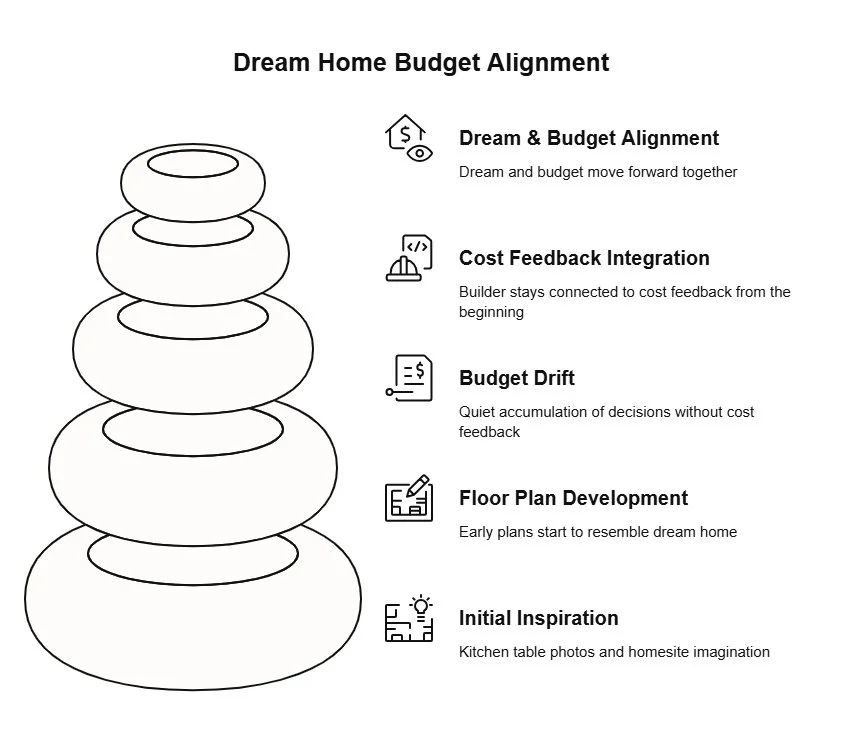
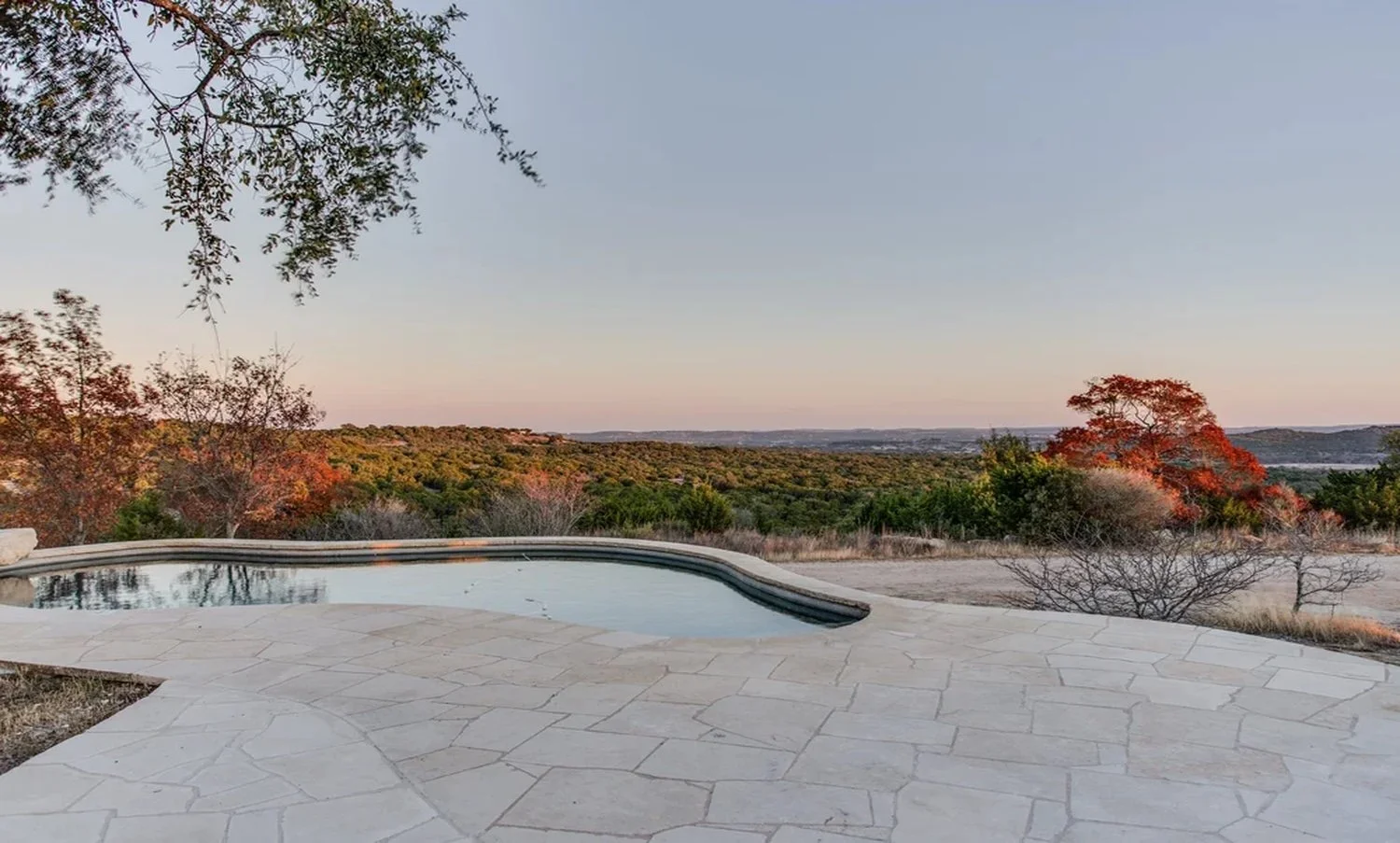
It may start around the kitchen table, with inspiration photos spread out between family members. It may happen while standing on a Spicewood homesite, imagining where the kitchen view should face, where the pool might sit, or how the driveway should approach the home. It may happen when an early floor plan finally starts to look like the place where holidays, quiet mornings, and family visits could unfold.
That stage should feel exciting. The home is still flexible.
It is also the stage where the budget can begin to drift.
The problem is not one bad decision. It is the quiet accumulation of beautiful decisions without whole-project cost feedback. A larger window package, a more complex roofline, a longer driveway, a pool cabana, upgraded finishes, and added outdoor living space may each feel reasonable on their own. Together, they can move the project further than the household expected.
That is why cost feedback belongs inside the design process, not after final plans are complete.
The families who build their dream homes in Spicewood, Lake Travis, and the Texas Hill Country without late-stage budget surprises are rarely the ones who spent less. They are the ones whose builder stayed connected to cost feedback from the beginning, so the dream and the budget moved forward together. The Riverbend process integrates this vision into a disciplined financial framework.
What Design and Budget Alignment Means in a Custom Home Build
Design and budget alignment means keeping design decisions connected to cost feedback so the home vision stays feasible before permitting and construction. The builder stays involved during design, the budget is not treated as an afterthought, and the household receives cost estimates before final plans harden. The goal is not to shrink the dream — it is to protect it.
When shaping a dream home, a homeowner wants cost feedback before the design is finalized so they can protect the vision without losing control of the budget. A budget-aware design process helps answer questions such as:
Is the home being designed around the family's highest priorities?
Has the property been walked and reviewed before architectural overcommitment?
Are site feasibility and infrastructure requirements part of the budget conversation?
Is the design detailed enough to support a useful construction-cost estimate?
Are allowances being treated as active budget tools rather than placeholders?
Does the family have a chance to approve the budget before final design and permitting?
That is the core purpose of design and budget alignment: to protect the home vision from late-stage surprises.
Why Final Plans Are Too Late for the First Serious Cost Conversation
The standard advice is straightforward: finish the design, then price the build. On the surface, this sequence seems efficient. In practice, it transfers a significant amount of financial risk to the family — quietly, and at exactly the wrong moment.
By the time plans are final, the family may already feel attached to the home. The kitchen view has meaning. The guest suite has a purpose. The pool, porch, and outdoor spaces are part of the imagined lifestyle.
Design decisions accumulate throughout the process. Every choice that gets approved — ceiling heights, structural spans, the outdoor living configuration, the window-to-wall ratio, the driveway grade, the pool placement — adds weight to the total project cost. Each choice, in isolation, seems manageable. Collectively, the cost impact stays invisible until it is not.
Emotional commitment also deepens with every design iteration. By the time a family has reviewed three rounds of floor plans and started imagining their furniture in each room, they have invested far more than time. Asking them to scale back at that stage is not a budget conversation. It is a loss.
A roofline simplification may feel like the home is being watered down. Reducing glass may feel like giving up the view. Reworking outdoor living may feel like losing the heart of the plan. When early cost feedback is part of design, the family makes clear, calm tradeoffs before the design becomes rigid.
This is especially important for a custom home in the Texas Hill Country because the land itself often affects the design. A view lot, acreage parcel, sloped site, long driveway, outdoor living plan, or Lake Travis-area property may create practical questions that are not visible from a floor plan alone. Budget confidence is created during design, not after plans are finalized.
The Design-Budget Checkpoint Map
The most useful custom home budgeting conversation is not a single meeting at the end. It is a sequence of checkpoints that keep the dream and the budget moving together.
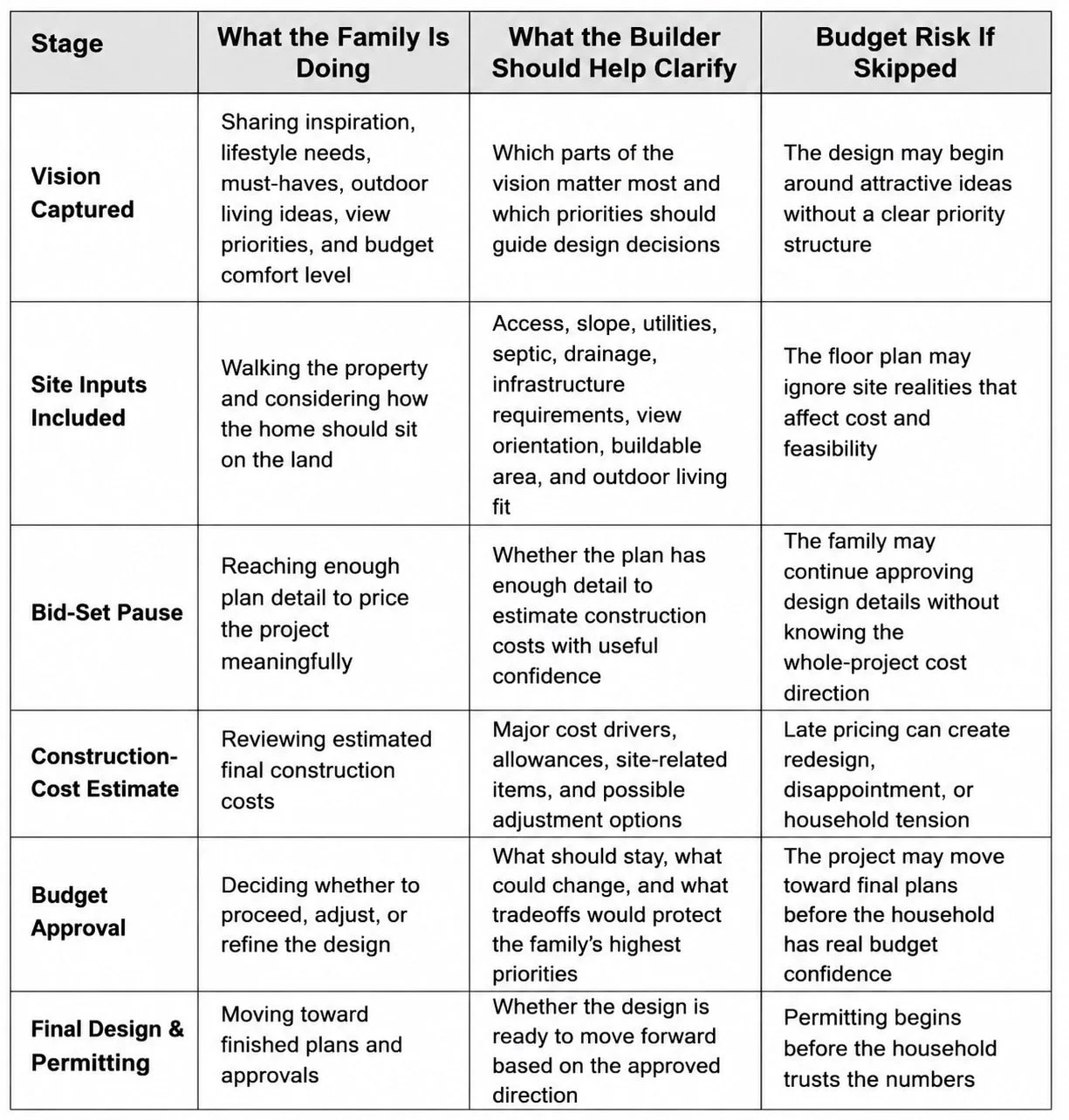
A bid-set is the level of plan completeness at which the builder can pause and estimate final construction costs meaningfully — not a rough ballpark based on square footage, but a grounded estimate based on the actual design, the actual site, and the actual selections being considered. It is not simply a rough sketch, and it is not necessarily the final construction document set. It is the pause point where the design is clear enough to price, while still flexible enough to adjust.
That pause is not a delay. It is a decision-protection point. NAHB's 2024 Construction Cost Survey found that, in its national sample, construction costs represented 64.4% of the average sales price and finished lot costs 13.7%. That is a national survey, not a Spicewood project estimate — but it illustrates why cost feedback deserves attention early, not after plans are finalized.
Once budget approval is given, design continues into its final form and permitting begins. The family moves forward not on hope, but on confirmation.
Where Budget Drift Quietly Enters the Design
Budget drift is not a single line item. It is a pattern of small additions, each individually justified, that together produce an estimate the original budget did not anticipate. These are the categories where it most commonly appears in Texas Hill Country custom home projects.
Layout complexity. Open floor plans with long structural spans, vaulted ceilings, or multi-level configurations require more material and engineering than simpler layouts. A custom layout may also need separate wings, extra corners, or special transitions to support a family's lifestyle. The visual drama of a great room with soaring ceilings is real. So is its effect on the structural budget.
Foundation and site-related work. On Hill Country terrain, slope changes the math significantly. A lot with meaningful grade may require retaining walls, stepped foundations, or substantial grading and drainage work before a single wall goes up. None of that is visible from a floor plan — it is only visible from a site walk.
Driveway length, access, and grading. A long private driveway on a Spicewood or Lake Travis acreage lot is not a landscaping line item. It is a real construction cost with implications for grading, base material, drainage culverts, and construction-site access.
Windows, doors, and view-driven glass. On a Hill Country or Lake Travis view lot, glass placement matters. Expansive glass walls, specialty window systems, or large sliding door assemblies carry costs that are easy to underestimate when they appear as simple rectangles on a floor plan. Glass is also a thermal factor, which affects HVAC design and cost.
Rooflines and architectural complexity. A straightforward roofline is one of the most cost-efficient structural decisions in custom home design. Complex intersecting rooflines, dramatic pitch changes, or architectural features that create difficult framing geometry move the budget quickly — often without the family realizing it during design review.
Outdoor living, pools, patios, and cabanas. Texas Hill Country homes often include substantial outdoor living areas, and for good reason. But a covered outdoor kitchen, pool and spa, cabana, fire feature, and connecting patio can add real cost to a project whose interior budget was already fully allocated. Because these spaces affect site planning and construction scope, they should be part of the early budget conversation.
HOA, permitting, and timing dependencies. On many Spicewood and Lake Travis lots, HOA architectural review, permitting timelines, and construction loan draw schedules are cost and schedule drivers, not administrative formalities. HOA approval processes can add weeks to a project timeline. Permitting requirements vary by jurisdiction and can affect what is buildable.
Utility, septic, and infrastructure requirements. Every lot carries infrastructure requirements: water well or municipal connection, septic system placement and type, electrical service, propane or natural gas, drainage strategy. On rural acreage or constrained properties, these costs can be substantial and must be understood before design begins in earnest.
Finish allowances and selection decisions. Allowances are often misunderstood. An allowance is a budgeted amount for a category that may not be fully selected yet — tile, lighting, plumbing fixtures, appliances, flooring, or cabinetry. Allowances can be helpful because they let design and planning move forward before every selection is final. But they need discipline. If the allowance is too vague, or if updates are not communicated clearly, the family may discover overages late. The goal is not to pressure the family toward less. It is to make sure finish choices carry visible cumulative impact. For a deeper look, Navigating Allowances: 3 Ways to Maximize Your Integrated Home Design and Shopping Allowance Autonomy: How to Choose Luxury Finishes Without Losing Budget Control are both worth reading before selections begin.
None of these categories is a reason to scale back the vision. Each is a reason to make sure cost feedback is present while the vision is still being shaped — not after it has become emotionally fixed.
A Practical Example: When Every Idea Is a Good Idea
Consider a family planning a custom home on acreage near Spicewood. They want the main living area aimed toward a view, a pool near the covered patio, a separate primary wing, a guest space for visiting family, and a driveway that feels private from the road.
None of those ideas is careless. Each one supports the life the family wants.
But together, they touch many budget-sensitive parts of the project: home orientation, grading, foundation, driveway access, roofline, exterior openings, outdoor living, pool location, drainage, utilities, and finish allowances.
Without cost feedback during design, the family may keep saying yes to good ideas without seeing the combined effect.
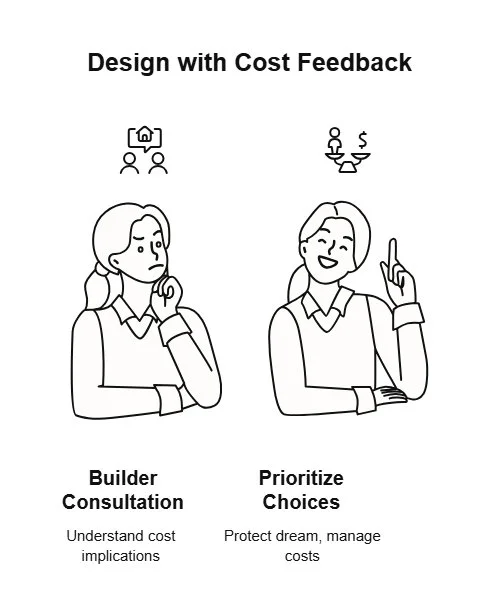
With cost feedback during design, the conversation becomes more useful. The builder can help the household understand which choices protect the dream, which choices carry the most cost sensitivity, and where adjustments may preserve the most important parts of the vision.
That is the difference between restriction and relief.
How Riverbend Homes Keeps the Design Creative Without Letting the Budget Disappear
"Ben was able to stay on budget with only the exception of things we planned to upgrade from the initial contract. This was minimal for a home in this price range, which is not at all what other people we know have experienced. He frequently found ways to save us money on our selections." — Christine G., Riverbend Homes client
The Riverbend process is built around a straightforward conviction: budget confidence is created during design, not after. That belief shapes every stage of how a project moves forward.
The Discovery Meeting begins at the property. The Riverbend Homes building process starts with a meeting at the actual lot — not at a desk, not over floor plans. Riverbend listens first. The conversation covers the family's vision, lifestyle needs, and inspiration ideas alongside the specific realities of the site: slope, access, views, drainage, utilities, setbacks, and infrastructure requirements. That listening posture is the Riverbend Difference — understanding what the family wants before offering a single recommendation, because a custom home is the foundation for family memories, not merely a structure.
The goal of that first conversation is not to produce a design. It is to make sure the design that follows is grounded in what the property can actually support — and what that support will cost.
Builder involvement continues through design. Riverbend stays involved as design develops, not to restrict the creative process but to keep the vision feasible. When a design choice carries cost implications — a roofline detail, a window package, an outdoor living configuration — that information remains visible to the household while it can still shape the decision. For more on why this unified accountability matters, Beyond the Kitchen Table Sketches: How Custom Home Design-Build Stops Budget Overruns explores how the design-build approach prevents the cost surprises that separated contracts create.
The bid-set pause creates the cost checkpoint. Once plans reach bid-set completeness, Riverbend pauses design development and prepares an estimated final construction cost. The household reviews that estimate, understands where the project stands, and approves the budget before final plans are drawn and permitting begins. This is the concrete process moment where budget confidence is created — not assumed.
Riverbend takes on a select number of projects at a time. That selectivity is not a constraint — it is what makes daily on-site involvement possible. It means every project gets the attention it deserves, and builds move faster than they typically do with builders juggling too many sites simultaneously. Riverbend Homes is a second-generation family-owned builder that has designed and built homes in the Texas Hill Country since 1996, serving Spicewood alongside Lake Travis, Horseshoe Bay, Lake LBJ, and the wider Hill Country region.
Understanding the AIA's framework for design phases — schematic design, design development, and construction documents — can help homeowners understand where cost estimating typically occurs in traditional architect-led processes. The AIA's resource on defining basic services provides useful context. The key distinction in a design-build model is that cost feedback is integrated throughout, rather than appearing only after construction documents are complete.
Questions to Ask Your Builder Before Plans Are Final
A homeowner does not need to become a builder to ask better questions. The goal is to understand whether the builder has a real process for connecting design decisions to cost feedback — or whether that feedback arrives too late to protect the household's vision.
At what point in the design process do you provide cost feedback? The answer should describe a specific stage during design — not a number delivered after plans are complete.
Do you stay involved during design, or do you wait until plans are finished to price the build? A builder who waits until final plans is a builder who may deliver a surprise.
What level of plan detail do you need before estimating final construction costs? Understanding what "bid-set completeness" means to this specific builder clarifies when the cost checkpoint will actually occur.
Which site conditions or infrastructure requirements must be understood before your cost feedback is meaningful? A builder with real site-first experience will have a specific answer — slope, access, utilities, septic, drainage, and HOA or permitting requirements are the starting points.
How do you account for HOA architectural review, permitting timelines, and financing draw schedules before final plans? These factors affect both cost and schedule. A thorough answer signals a builder who plans ahead.
How are allowances set, and how do we track whether our selections are staying within them? A builder with allowance discipline can explain specifically how allowances are established, communicated, and updated throughout the project.
How do allowances change when selections evolve, and how will we know if choices are moving the total budget? The goal is transparency before selections are finalized, not a reconciliation conversation afterward.
How do you prevent attractive design choices from accumulating into a budget surprise? A process-oriented builder will describe a specific mechanism — not a vague commitment to staying in touch.
How do you keep both the vision and the budget visible during design? This verifies whether your builder utilizes an integrated design-build fiscal model.
What happens to the design and the budget before permitting begins? The answer should include a budget approval step — not just a design sign-off.
The FTC's guidance on home improvement contracts is a useful reference for any homeowner evaluating written estimates, scope clarity, and contract terms — a helpful baseline before signing anything. For further context on how contract type shapes budget risk, Fixed-Price vs. Cost-Plus: Which Contract Protects Your Custom Home Budget explains the tradeoffs clearly.
For a broader introduction to how design-build differs from the traditional architect-then-builder model, What is Design-Build? The Simple Explanation for Custom Homeowners is a useful starting point.
Financing and Timing Should Not Be Ignored
Not every homeowner uses the same financing path, and financing details vary by lender, household, and project. Still, construction financing, permitting, HOA review, and start-date timing can affect the planning sequence.
Riverbend's process notes that several factors influence the construction start date — financing, permitting, and HOA requirements among them. That is another reason design-budget alignment matters. If the household moves toward final plans without cost feedback, later budget adjustments can create timing friction. If cost feedback is built into design earlier, the family has a clearer basis for the next set of conversations and fewer surprises when those conversations happen.
For homeowners using construction financing, the Consumer Financial Protection Bureau's resources on mortgage disclosure rules can be a useful general reference. Project-specific financing questions should be discussed with qualified lending and financial professionals.
Budget Feedback Should Feel Like Relief, Not Restriction
Budget confidence is not only mathematical. It is relational. A family building a custom home is trusting the builder with one of the most personal and expensive decisions they may ever make. The home is not just a structure — it is the foundation for family memories, a reflection of personal style, and a long-term investment in how the household wants to live.
That level of trust requires listening, clear communication, process discipline, and the willingness to pause before the design outruns the budget. Clients who have built with Riverbend consistently describe the process as more fun and more rewarding than they expected — not because the project was simple, but because the process kept them informed, involved, and confident that the builder understood both the vision and the responsibility it carried.
A dream home does not become less special because it receives cost feedback during design. It becomes more trustworthy. The household that knows its construction estimate — before final plans are drawn, before permitting is filed, before emotional momentum makes adjustments feel like losses — is the household that moves through the build with real confidence. They have made genuine decisions, not provisional ones.
Budget feedback is not where the dream gets smaller. It is where the dream becomes safer to build.
When the design, the land, and the budget are part of the same ongoing conversation, the choices made along the way carry real weight. They stick. And the home that results reflects what the family actually decided — not what got locked in before the numbers were visible.
See how Riverbend's process protects the vision before final plans.Explore the Riverbend building process
Ready to think through what your lot can support?Explore what it means to build a custom home in Spicewood
When the household is ready for a property-first conversation, contact Riverbend Homes.
FAQs
What is design and budget alignment in custom home building?
Design and budget alignment means keeping design decisions connected to cost feedback as the home is developed. The purpose is to help the homeowner protect the vision before plans are final, permitting begins, or major decisions become harder to change.
When should cost feedback happen during custom home design?
Cost feedback should happen before final plans. A useful checkpoint is the bid-set stage, when the design is detailed enough to estimate construction costs meaningfully but still flexible enough for thoughtful adjustments.
What is a bid-set pause?
A bid-set pause is the point where plan development stops long enough for the builder to estimate likely final construction costs. It gives the homeowner a clearer budget picture before moving into final design and permitting.
Why is late pricing risky for a custom home?
Late pricing can create emotional and practical stress because the family may already be attached to the design. If the estimate arrives after plans feel final, necessary adjustments may feel like losses rather than normal design decisions.
How can homeowners keep allowances from causing budget surprises?
Homeowners can ask what each allowance covers, how selections are tracked, how credits and overages are handled, and when the budget is updated. Allowance discipline helps finish choices stay connected to the full project budget.
Related Reading
Beyond the Kitchen Table Sketches: How Custom Home Design-Build Stops Budget Overruns
What is Design-Build? The Simple Explanation for Custom Homeowners
Fixed-Price vs. Cost-Plus: Which Contract Protects Your Custom Home Budget
Navigating Allowances: 3 Ways to Maximize Your Integrated Home Design
Shopping Allowance Autonomy: How to Choose Luxury Finishes Without Losing Budget Control
Stop the Finger-Pointing: How Design-Build Delivers Your Custom Home On Budget
How to Translate Your Dream Home Vision into a Functional Design Plan
Every custom home and homesite is different. Cost, feasibility, permitting, financing, and construction details depend on the property, design, selections, jurisdiction, and project scope. Use this article as a planning guide, not as a final estimate or professional engineering, legal, or financial advice.
Our Editorial Process
Riverbend Homes content is created to help Texas Hill Country homeowners make clearer, calmer custom-home decisions. The editorial process begins with Riverbend's documented building process, local experience, client-facing materials, and verified internal resources. Drafts are reviewed for practical accuracy, plain-language usefulness, local relevance, and alignment with Riverbend Homes' site-first approach before publication.
By Riverbend Homes Editorial Team
Riverbend Homes is a second-generation family-owned custom home builder serving Spicewood, Lake Travis, Horseshoe Bay, Lake LBJ, and the Texas Hill Country. Since 1996, Riverbend Homes has focused on listening closely, building selectively, staying involved on site, and helping families turn custom-home visions into well-planned homes.
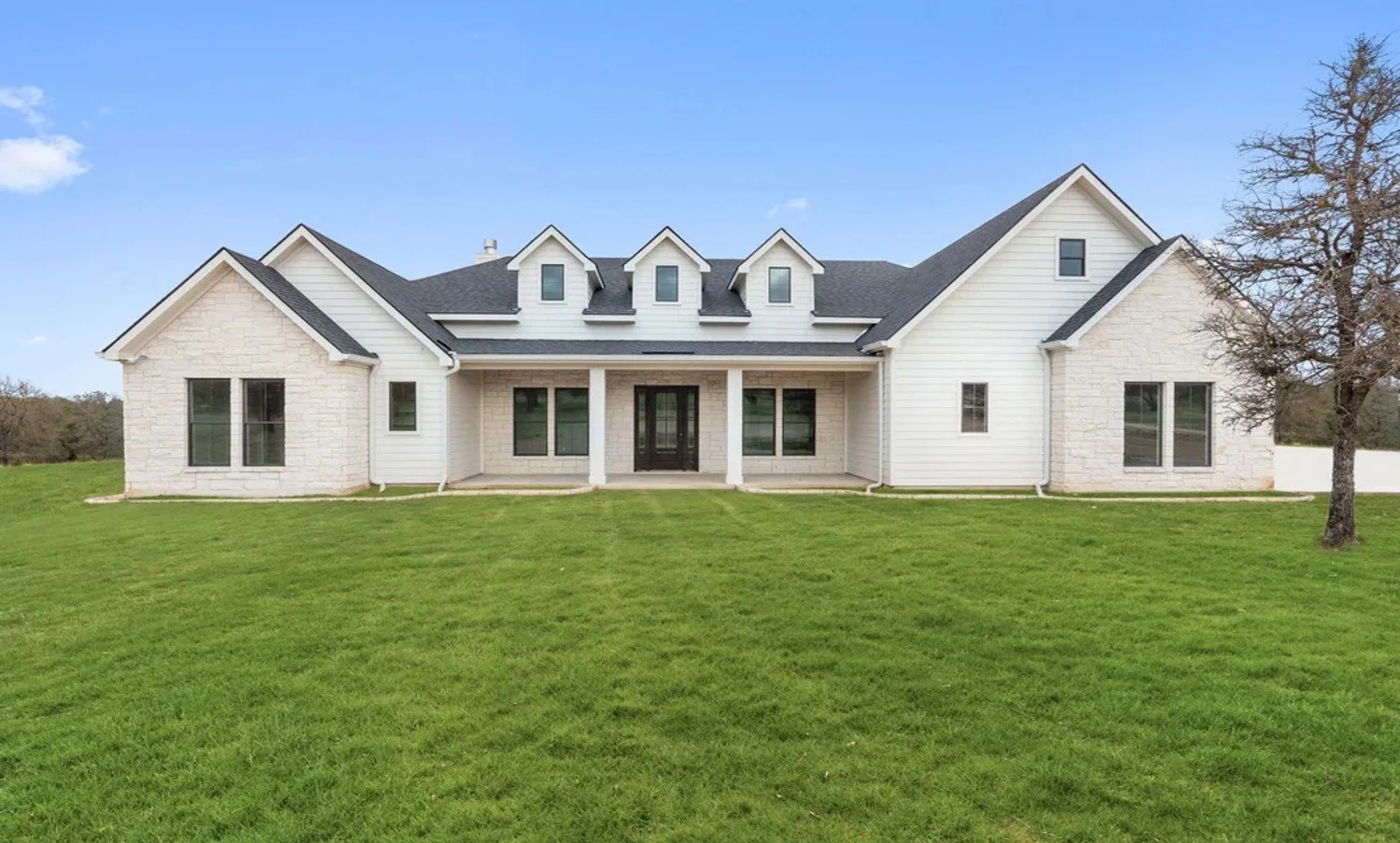
The Secret to Stress-Free Construction: How Single-Source Custom Building Protects Your Vision
Custom builds go off-track when architects and builders interpret plans differently. Design-build keeps one team accountable from first sketch to final walkthrough.
📌 Key Takeaways
One team handling both design and construction eliminates the finger-pointing and miscommunication that derail most custom home projects.
Fragmented Teams Create Chaos: When your architect and builder work separately, you become the full-time translator caught between conflicting interpretations and blame-shifting.
Unified Accountability Protects Your Vision: Design-build keeps your approved plans intact because the same people who drew them are responsible for building them correctly.
Field Decisions Stay on Track: When surprises happen during construction, one team balances aesthetics, structure, and cost together instead of defaulting to whatever's fastest.
Ask Who Owns Design Intent: Before signing, confirm one party is accountable if the build team says the plan needs to change—vague answers signal trouble ahead.
Limited Projects Mean Daily Presence: Builders who cap their workload can manage your site every day, catching problems before they become expensive fixes.
One accountable team turns construction from a stressful mediation job into an experience you actually enjoy.
Homeowners planning a custom build in the Texas Hill Country will find a clear framework for evaluating builders here, preparing them for the detailed process overview that follows.
~ ~ ~ ~ ~ ~ ~ ~ ~ ~ ~ ~ ~ ~ ~ ~ ~ ~
The call comes on a Saturday morning. Your friend just finished their custom home—eighteen months late and $200,000 over budget. The worst part? The house looks nothing like the renderings they fell in love with.
"The builder said the architect's design wasn't practical," they explain. "So they 'adjusted' things. By the time we noticed, the framing was done."
This story plays out across the Texas Hill Country more often than it should. Beautiful architectural plans slowly erode during construction. Details get "value engineered" away. The homeowner spends months mediating between professionals who point fingers at each other.
But here's what most people don't realize: this chaos isn't inevitable. It's the predictable result of a fragmented process—and it's entirely preventable.
Why Custom Builds Feel So Stressful Once Construction Starts
Fragmented accountability causes most construction stress, not the complexity of building itself.
In the traditional model, you hire an architect to design your home. Then you take those plans to a separate builder who prices and constructs the project. Sounds reasonable on paper. In practice, it creates a communication nightmare.
The architect draws what they believe is possible. The builder interprets those drawings through their own lens of cost and convenience. When conflicts arise—and they always arise—you're standing in the middle. The architect says the builder isn't following the plans. The builder says the plans aren't buildable. Meanwhile, the framing crew is waiting for an answer, and every delay costs money.
Who signed off on that change? Who's responsible for fixing it? Why does nobody seem to own this problem?
You didn't sign up to manage professionals. You signed up to build a home. Yet the traditional model quietly transforms every homeowner into a full-time project mediator.
This isn't about finding better architects or builders. It's about recognizing that the structure itself creates friction. Separate contracts mean separate agendas. Separate timelines. Separate definitions of success.
What a Stress-Free Build Actually Feels Like
Imagine a different scenario.
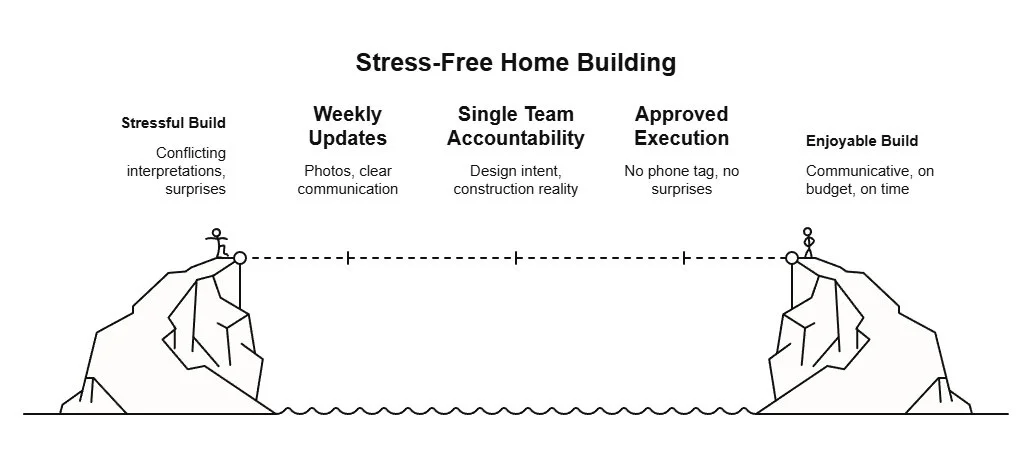
You receive a weekly update with photos showing exactly what happened on site. When a question comes up about a window placement, one team handles it—consulting both the design intent and the construction reality before bringing you a recommendation. You approve. They execute. Done.
No phone tag between separate offices. No conflicting interpretations of the same drawing. No surprises when you visit the site and find something that doesn't match what you approved.
This isn't fantasy. It's what happens when one team carries accountability from the first sketch through the final walkthrough. Riverbend Homes clients describe this kind of experience as communicative, on budget, on time, and even enjoyable—a sharp contrast to the horror stories they'd heard before building. You can read their accounts on the testimonials page.
The emotional shift is significant. Instead of bracing for the next conflict, you actually enjoy watching your home take shape. You trust that the vision you approved will survive contact with reality because the people protecting it are the same people building it.
Stress drops when accountability stops bouncing between separate parties.
What Single-Source Custom Building Means in Real Life
Single-source custom building means the team that designs your home is contractually responsible for constructing it. No handoff. No translation errors. No "that's not our department."
Design-build is the formal industry term. According to the Design-Build Institute of America, this delivery method works because it creates a single point of accountability for quality, cost, and schedule. When problems arise, there's no finger-pointing—just problem-solving. The institute describes design-build as a collaborative, integrated process with benefits such as faster delivery, earlier knowledge of firm costs, and fewer changes, claims, and disputes when executed well. Outcomes can still vary by team and project, but the structural advantages are clear.
For homeowners, single-source building changes the daily experience of construction. Questions get answered faster because decisions don't require coordination between separate companies. Design intent stays intact because the people building understand why specific details matter.
How One Team Protects Your Vision From Sketches to Site Decisions
Design protection isn't about rigid adherence to every line on a drawing. It's about preserving the intent behind those lines when construction realities require adjustments.
Every custom home encounters surprises. Rock appears where soil tests predicted dirt. A window placement conflicts with structural requirements. Material lead times shift. The question isn't whether changes will happen—it's who manages them and with what priorities.
In a fragmented model, field decisions often default to whatever's fastest or cheapest. The builder's crew needs to keep moving. The architect isn't on site. Small compromises accumulate until the finished home feels different from what you approved.
Under unified accountability, the design team and build team share the same goal: executing your approved vision within your approved budget. When field conditions require adaptation, the conversation happens internally before reaching you. The recommendation you receive balances aesthetic intent, structural reality, and cost impact—because one team holds all three responsibilities.
This is how design-build delivers custom homes on budget without sacrificing the details that made you fall in love with the design.
This unified approach is why the initial discovery meeting at your property is so critical. Understanding site feasibility and infrastructure requirements early—before design gets too far ahead—prevents the painful "value engineering" conversations that plague traditional builds. Riverbend Homes stays involved throughout design specifically to maintain vision while keeping projects within budget, pausing at bid-set completeness to estimate final construction costs before permitting begins.
The secret? We listen. From the initial meeting, the conversation covers must-haves, style preferences, space use, and budget—so later reinterpretation becomes far less likely.
5 Signs Your Builder Will Protect the Plan Instead of Reinterpreting It
Not every builder operates the same way. These indicators help distinguish partners who protect your vision from those who might quietly reinterpret it.
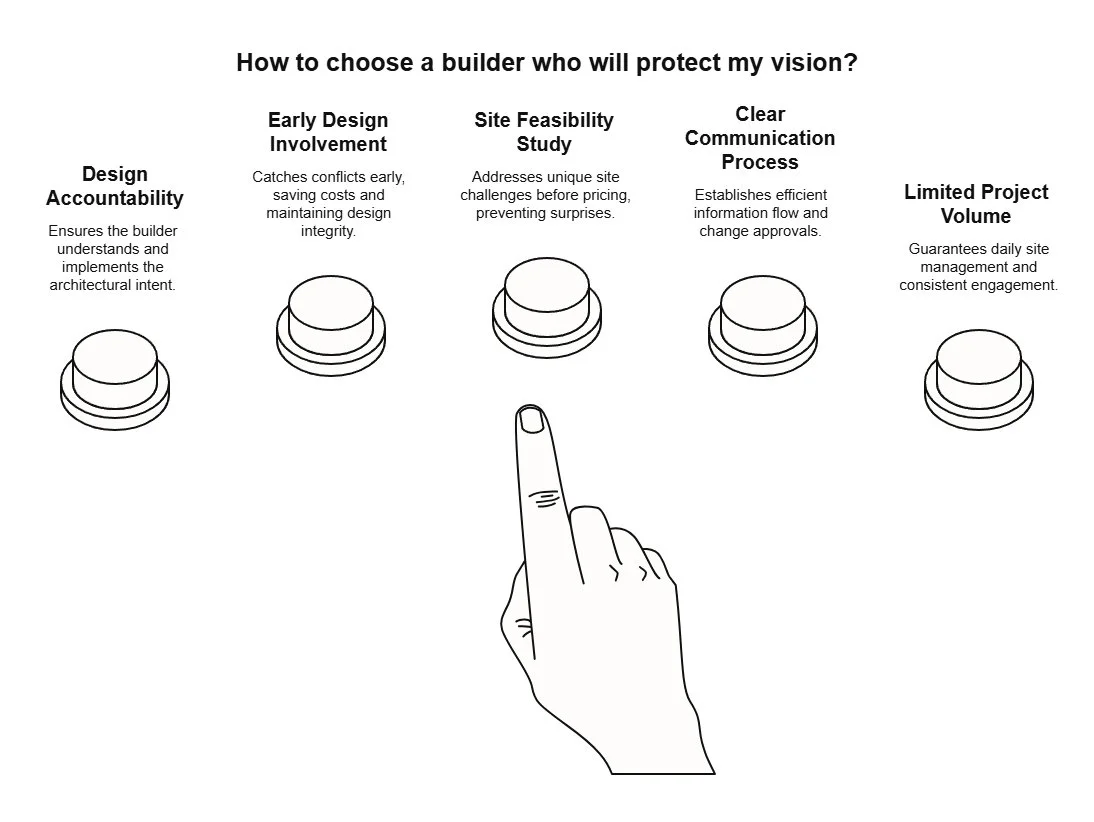
They explain design accountability clearly.
Ask who owns the architectural intent during construction. If the answer involves phrases like "we'll coordinate with your architect" or "that's really between you and the designer," accountability is already fractured. A single-source builder should be able to explain exactly how design decisions carry through to field execution.
They participate actively in design and budgeting before breaking ground.
Builders who only engage after plans are complete have no ownership of the design's buildability. Look for partners who stay involved during design to catch conflicts early, when changes are cheap, not during framing when they're expensive. If budget continuity concerns you, The "Bidding" Myth explains why unified delivery prevents surprises.
They walk your site and discuss feasibility before talking numbers.
Generic square-foot pricing ignores everything that makes your lot unique. Rock, slope, access, utilities—these factors determine what's actually possible and at what cost. A builder who hasn't studied your specific property isn't ready to protect your project.
They can describe their communication process when field questions arise.
Construction generates dozens of small decisions weekly. How does information flow? Who approves changes? How quickly do you hear about issues? Vague answers suggest ad-hoc processes that create gaps.
They limit their project volume.
Builders who overcommit can't provide daily site management. Ask how many projects they run simultaneously and how often someone from their team is physically present on your job site. The Design-Build Institute's best practices emphasize that effective project delivery requires consistent engagement, not periodic check-ins.
A Simple Communication Map: Traditional Build vs. Single-Source Build
The difference between stressful and stress-free often comes down to how information flows.
Traditional Build Communication: In a separated model, you sit at the center of a web. Questions from the builder go to you. You relay them to the architect. The architect responds to you. You translate back to the builder. Multiply this by hundreds of decisions across a twelve-month build. Add subcontractors who report to the builder but may need design clarification. The lines tangle quickly.
When something goes wrong, tracing responsibility requires archaeology. Which conversation contained the miscommunication? Whose interpretation prevailed? Who approved what, and when?
Single-Source Communication: Under unified delivery, the communication map simplifies dramatically. Design questions stay internal. The team resolves conflicts before presenting options. You receive recommendations rather than problems. Your role shifts from translator and mediator to approver and decision-maker.
More handoffs mean more reinterpretation and more homeowner mediation. One accountable team means clearer decisions and less stress.
This streamlined structure is why Riverbend Homes limits project volume—to maintain daily on-site presence and keep communication tight. When the team isn't stretched across too many builds, nothing falls through the cracks.
What to Ask Before You Sign Anything
The right questions reveal whether a builder will protect your vision or leave you mediating between professionals. Consider these before committing:
"Who is accountable if the build team says the plan needs to change?"
The answer should be immediate and specific. If it involves multiple parties negotiating, accountability is already diluted.
"How do you protect the original design intent during construction?"
Listen for process, not promises. What systems ensure that field decisions honor approved aesthetics?
"How involved are you in the design phase before pricing is finalized?"
Builders who only price completed plans have no stake in their buildability. Continuous involvement during design prevents later conflicts.
"How do you handle site-driven realities without breaking the vision?"
Every project encounters surprises. The question is whether adjustments preserve intent or simply expedite construction.
"Who do I call when I have a question during the build?"
One clear answer indicates unified accountability. Multiple contacts suggest fragmented responsibility.
"How many projects are you managing right now, and how often will someone be on my site?"
Volume reveals capacity. Daily presence indicates commitment.
These aren't confrontational questions—they're clarifying ones. Builders who operate under single-source accountability welcome them because the answers showcase their model's strength.
Your Vision Deserves Protection
Building a custom home in the Texas Hill Country should be an experience worth remembering—for the right reasons. The land is beautiful. The possibilities are exciting. The process doesn't have to be painful.
Stress-free construction isn't about finding a builder with a better personality or hoping for good luck. It's about choosing a structure that eliminates preventable friction. One accountable team. Clear communication. Design intent that survives first contact with the job site.
If you're still early in the process—perhaps you've just purchased land or you're comparing approaches—the first 48 hours after buying your lot offer a critical window for smart decisions. Spring is traditionally a popular season when many prospective homeowners accelerate their researching and budgeting for major builds, and making process decisions early means entering the peak construction season with momentum rather than scrambling.
Explore how Riverbend Homes approaches the design-build process, stay informed with Hill Country building insights, or schedule a Discovery Meeting to see how your lot, goals, and constraints would be evaluated in real life.
Disclaimer: This content is educational and reflects general principles of design-build project delivery. Individual project outcomes depend on site conditions, local regulations, and specific contractual arrangements.
Our Editorial Process:
Our expert team uses AI tools to help organize and structure our initial drafts. Every piece is then extensively rewritten, fact-checked, and enriched with first-hand insights and experiences by expert humans on our Insights Team to ensure accuracy and clarity.
By the Riverbend Homes Insights Team
Riverbend Homes has designed and built custom homes in the Texas Hill Country since 1996. As a second-generation family-owned design-build firm, the team focuses on listening closely, staying involved through design and budget decisions, and helping homeowners create distinctive homes without losing control of the process.
Fixed-Price vs. Cost-Plus: Which Contract Protects Your Custom Home Budget?
Fixed-Price contracts shift cost-increase risk to your builder, while Cost-Plus adds 15-20% markup on every overage you pay. Compare both before signing.
📌 Key Takeaways
Your construction contract determines who pays when costs rise—Fixed-Price shifts that risk to the builder, while Cost-Plus leaves you holding the bag.
Contract Type = Risk Owner: Cost-Plus means you pay for every price increase, delay, and inefficiency; Fixed-Price means the builder absorbs typical market swings after signing.
Low Bids Often Hide Incomplete Scope: That cheap estimate usually excludes items you'll need, turning "savings" into expensive change orders with markups attached.
Price-Per-Square-Foot Misleads: This number ignores site prep, septic, wells, and finish quality—only the total contract price with clear inclusions matters.
Vet Allowances Before Signing: Trustworthy builders explain exactly what's covered and what happens if you exceed allowances, so you're not surprised mid-project.
Demand Written Scope Clarity: If it's not written down, it's not real—ask to see what's included, what's excluded, and how change orders get priced and approved.
Budget certainty comes from contract structure, not promises.
Families planning custom homes in the Texas Hill Country will gain clarity on protecting their investment, preparing them for the detailed builder vetting process that follows.
~ ~ ~ ~ ~ ~ ~ ~ ~ ~ ~ ~ ~ ~ ~ ~ ~ ~ ~ ~ ~ ~ ~ ~ ~ ~ ~ ~ ~ ~ ~ ~ ~ ~ ~ ~ ~ ~ ~ ~ ~ ~ ~ ~ ~ ~ ~ ~ ~ ~ ~ ~ ~ ~
It's 6:00 PM on a Sunday evening. You're staring at a spreadsheet labeled "Allowances" and wondering if the granite countertops are actually included—or if that's another surprise waiting to hit your bank account. The numbers don't quite add up. The builder's proposal mentioned "estimated costs," but estimated by whom? And based on what?
This shouldn't be this confusing.
If you're planning a custom home in Spicewood, Horseshoe Bay, or anywhere along Lake Travis, you've likely encountered two contract types: Fixed-Price and Cost-Plus. The difference between them isn't just accounting—it's the difference between sleeping soundly and dreading every phone call from your builder.
Here's the honest truth before we go further: if you're looking for the lowest price-per-square-foot over long-term quality and budget certainty, we're not the right fit. This guide is for families who want to understand how contract structure protects—or exposes—their investment.
Your contract is not paperwork. It is your financial risk plan.
A Fixed-Price contract prevents budget spiraling out of control. It achieves this by shifting the financial risk of material price fluctuations from the homeowner to the builder once the agreement is signed.
Fixed-Price vs. Cost-Plus: The 5-Minute Breakdown
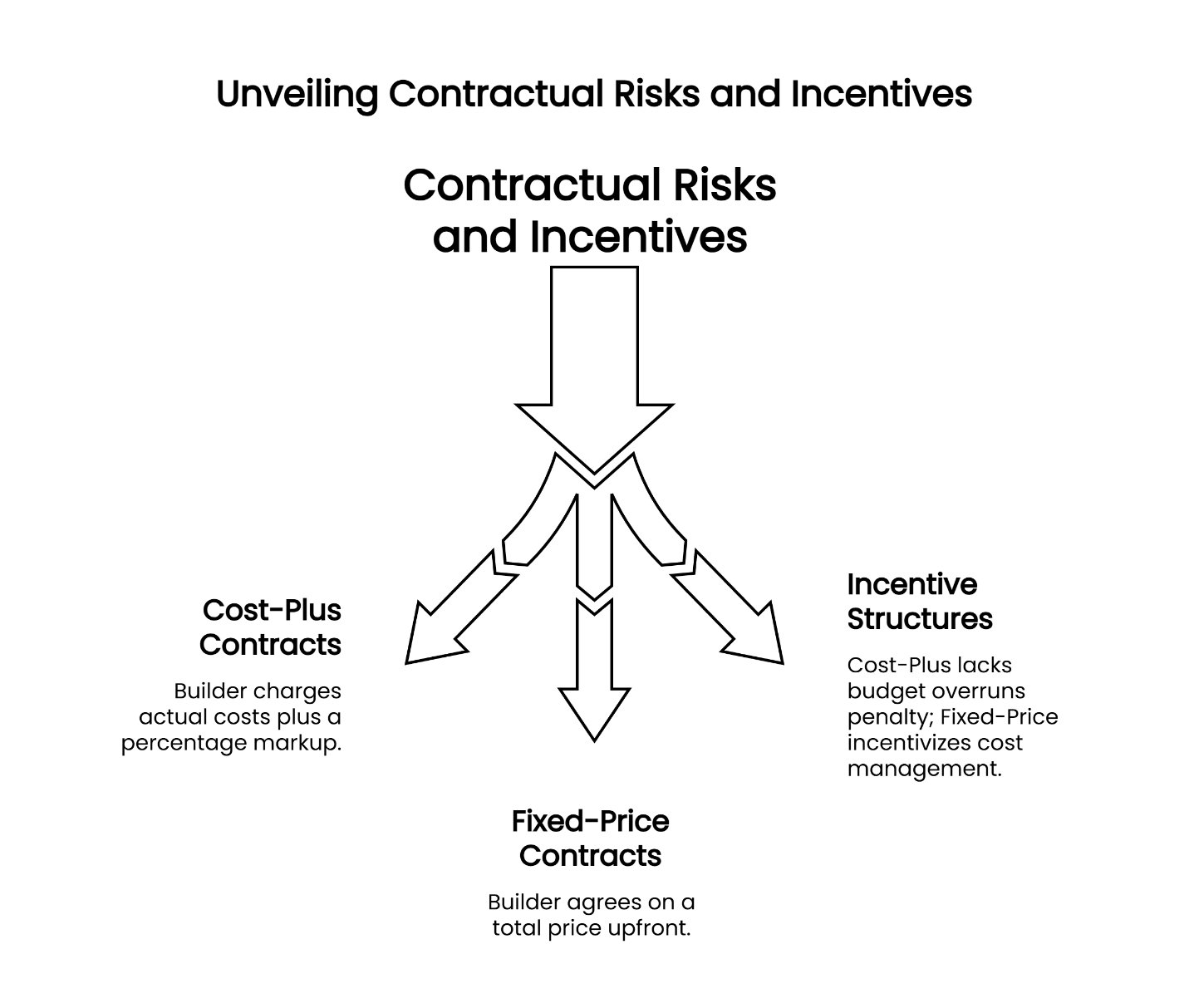
The contract you sign determines one critical thing: who pays when costs rise?
Cost-Plus contracts work like a blank check. The builder charges you for actual material and labor costs, then adds a percentage markup (typically 15-20%) as their fee. Sounds fair on paper. The problem? You bear 100% of the risk for price increases, delays, and inefficiencies. If lumber prices spike mid-project—that's your problem. If the crew takes longer than expected—that's your tab.
Fixed-Price contracts are designed to give you peace of mind, functioning much like an all-inclusive resort. You agree on a total target price upfront, and the builder generally absorbs the risk of standard market fluctuations once the contract is signed. If steel prices experience typical volatility after you've signed, a well-prepared builder usually covers it. If rock excavation takes three extra days on your Bee Cave lot, a thorough builder will have already factored those anticipated site conditions into your original number, severely limiting your exposure to surprises.
The incentive structures couldn't be more different. Under Cost-Plus, there's no penalty for the project running over budget—the builder still gets their percentage. Under Fixed-Price, the builder has every reason to manage costs tightly, because overruns eat into their margin.
Who Bears the Risk? A Side-by-Side Comparison
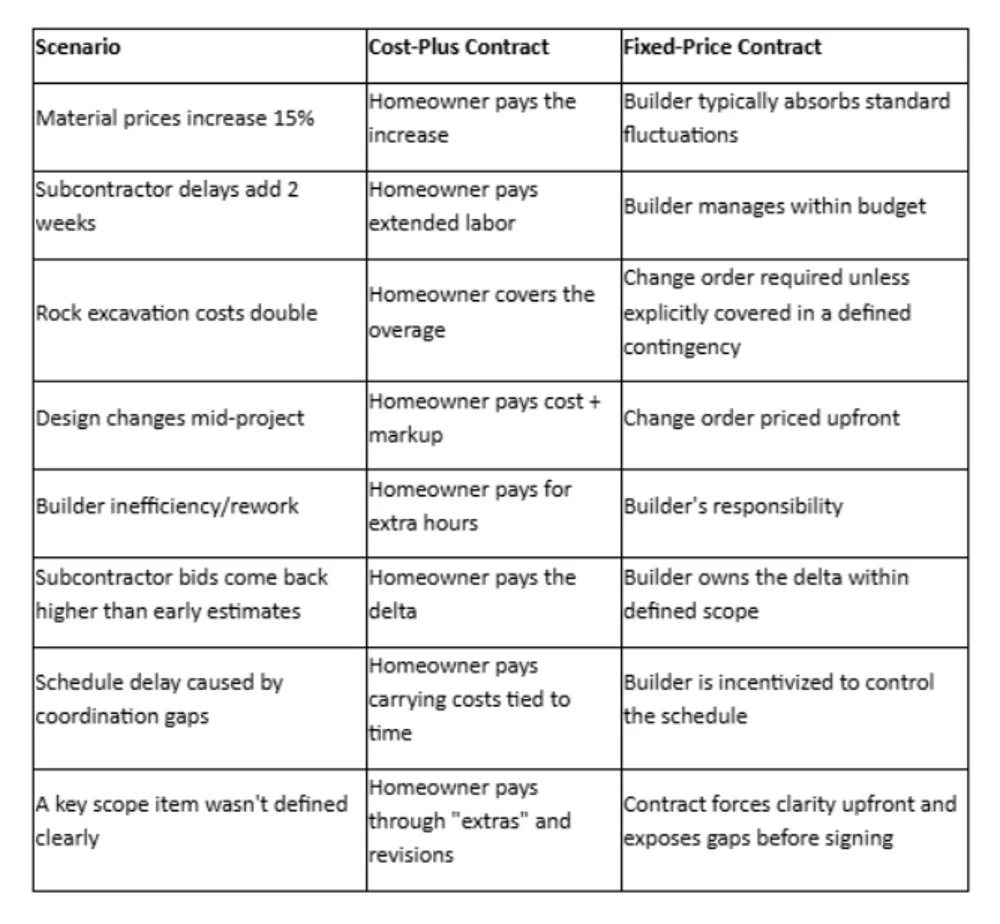
For families building on complex Hill Country terrain—where LCRA watershed regulations add permitting layers and limestone can lurk inches below the surface—the Cost-Plus model becomes especially risky. You're signing up for uncertainty on top of uncertainty.
The "Low-Ball" Bid Myth: Why Cheaper Upfront Costs More Later
Here's a misconception we encounter constantly: "I should get multiple bids and go with the lowest number."
For production homes on flat suburban lots, competitive bidding makes sense. For bespoke luxury homes on sloped Hill Country sites with specific drainage requirements and HOA design standards? Standard bidding fails because "lowest price" usually means "incomplete scope."
That low Cost-Plus bid often excludes allowances you'll actually need. The $200,000 "estimate" becomes $280,000 in reality—plus 18% markup on every overage. The builder who bid $240,000 with realistic allowances suddenly looks like the honest one.
The "Change Order" trap works like this: A Cost-Plus builder submits a lean initial bid to win your business. Once construction starts, every modification—every "oh, we didn't account for that"—triggers a change order. Each change order carries their markup percentage. By project end, you've paid a premium for what was marketed as a discount.
The "Cheap" Bid Reality: In custom building, the lowest bid often reflects incomplete scope. Missing scope doesn't disappear—it comes back as change orders, rework, and hard conversations when you're already committed. In a volatile market, a "low" Cost-Plus bid is actually a liability, not a saving.
As one Riverbend Homes client in Horseshoe Bay put it: "During these times of volatility, they won't leave you hanging." That's not a comment about price—it's about predictability.
Myth vs. Reality: The Price-Per-Square-Foot Trap
The Myth: "I can compare builders by their price per square foot."
The Reality: Price-per-square-foot tells you almost nothing about final cost. It doesn't account for site preparation on sloped lots, septic systems, well drilling, the quality of finishes, or the complexity of your floor plan. A $180/sq ft quote that excludes your kitchen appliances and driveway isn't comparable to a $220/sq ft quote that includes everything. The only number that matters is the total contract price—and whether that number is guaranteed or estimated.
If you're in a phase where you're comparing builders primarily by a number on a sheet, pause. That approach works for simpler projects, not complex luxury sites. If you're looking for a local team that understands what makes the Hill Country different, start with local custom home builders.
How to Vet a Fixed-Price Builder in the Texas Hill Country
Not every builder offering "fixed price" delivers the same protection. Fixed price only protects you if it's built on real scope clarity. Here's how to separate genuine budget security from marketing language.
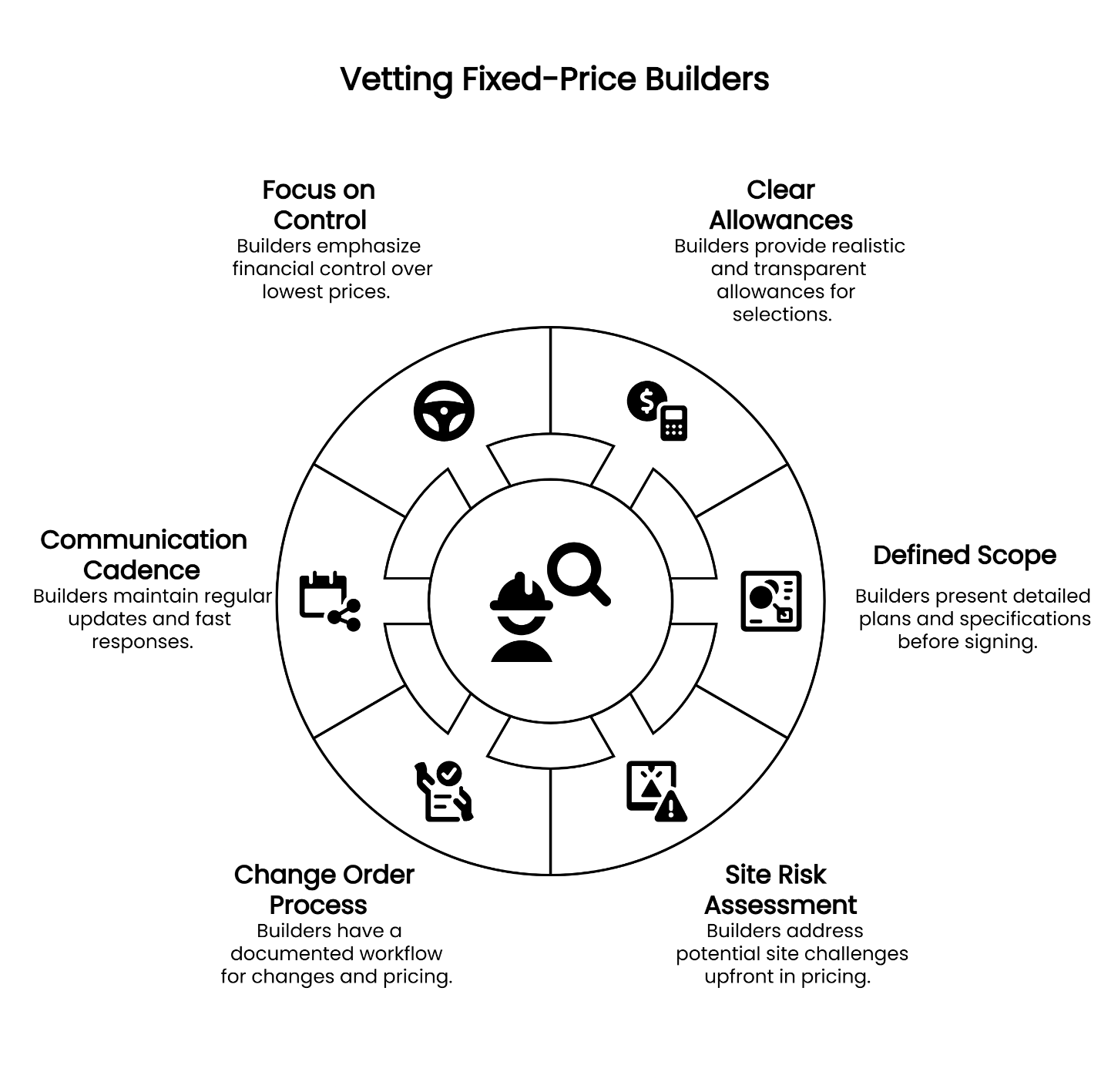
They explain allowances like an adult conversation. A trustworthy Fixed-Price builder provides generous, realistic allowances based on your stated preferences. They'll walk you through selections before signing so you understand what's covered. Vague or suspiciously low allowances signal a Cost-Plus mentality hiding behind Fixed-Price language.
They show you what "scope complete" means. The more complete the plans and specifications before signing, the less room for surprises. You should be able to see exactly what's included and what's excluded—in writing.
They address site risk upfront. Hill Country lots hide surprises. Rock. Springs. Drainage challenges. A genuine Fixed-Price builder has already accounted for likely scenarios in their pricing. They've built on enough Spicewood and Lake Travis properties to know what the land tends to reveal. Rock, drainage, access, utilities, and permitting processes should be part of early conversations—not discoveries after the contract.
They have a clear change-order process. Not "we'll figure it out later," but a documented workflow with pricing and approval before work proceeds. If you change the plan, upgrade finishes beyond allowances, or add scope, you should expect a documented change order with transparent pricing.
They emphasize communication cadence. Transparency isn't just about the contract—it's about communication throughout the build. Weekly updates, schedule visibility, and fast answers reduce the friction that causes delays and cost creep. One Riverbend Homes client described the experience this way: "Ben and Blake have good chemistry and are very approachable and accessible." That kind of communication isn't a feel-good extra—it's a budget control tool.
They don't sell you on the lowest number—they sell you on control. If a builder leans hard on "we're the lowest," it usually means scope is thin. The relief of watching your home take shape exactly as planned comes from knowing where you stand financially at every milestone.
When you find the right builder, the process transforms. As one client described their experience: "From our first discussion, Ben was aligned with our vision and told us that what others said was not possible would be possible."
That alignment—between your vision, your budget, and your builder's commitment—is what Fixed-Price protection actually delivers. This is where the design-build process earns its keep. When design and construction are coordinated, you get pricing feedback while decisions are still easy to adjust. For a deeper look at that accountability loop, read Stop the Finger-Pointing: How Design-Build Delivers Your Custom Home On Budget.
Three Questions for Your Contract Review
Before signing any construction agreement, ask these questions and demand clear answers:
1. "Show me what is explicitly included and explicitly excluded."
If it's not written down, it's not real. What's included in your allowances—and what happens if you exceed them?
2. "How are allowances structured—and what happens when selections exceed them?"
You want transparent overage handling, not mystery invoices.
3. "What's the process for change orders, and when do I see pricing?"
The safest answer is: pricing is presented and approved before work proceeds.
The Path Forward: From Budget Anxiety to Building Confidence
The contract decision isn't really about paperwork. It's about whether you'll spend the next 12 months worrying about phone calls from your builder—or enjoying the process of watching your Hill Country home rise from the foundation up.
As you enter the spring planning phase, locking in your budget matters more than ever. Interest rate shifts can change financing overnight. Material costs fluctuate with global supply chains. A Fixed-Price contract doesn't just protect your current budget—it shields you from market chaos you can't predict or control.
If you're considering managing the build yourself to save costs, we'd encourage you to read about the hidden stress of DIY home building before deciding. The math rarely works out the way people hope.
For families ready to build with transparency and without surprises, the next step is a conversation. Not a sales pitch—a discovery meeting where we walk your lot together, understand your vision, and determine if we're the right fit for each other.
Because your sanctuary deserves to be built on certainty, not estimates.
Stay Informed: Hill Country Building Trends & Tips
Ready for the Next Step? Schedule Your Discovery Meeting
Disclaimer: This article is for informational purposes and reflects general guidance on construction contract types. Specific contract terms, pricing structures, and project requirements vary. We recommend reviewing any construction agreement with appropriate legal and financial advisors before signing.
Our Editorial Process
Our expert team uses AI tools to help organize and structure our initial drafts. Every piece is then extensively rewritten, fact-checked, and enriched with first-hand insights and experiences by expert humans on our Riverbend Homes Insights Team to ensure accuracy and clarity.
By: The Riverbend Homes Insights Team
The Riverbend Homes Insights Team is our dedicated engine for synthesizing complex topics into clear, helpful guides. Riverbend Homes is a proud member of the National Association of Home Builders (NAHB), Texas Association of Builders (TAB), and Hill Country Builders Association (HCBA).
What is Design-Build? The Simple Explanation for Custom Homeowners
Design-build means one team handles both your home's design and construction, giving you immediate budget feedback on every decision—not surprises months later.
📌 Key Takeaways
Design-build unifies architectural design and construction under one contract, delivering continuous budget feedback and single-source accountability that prevents the costly surprises of traditional separated processes.
One Contract Ends Finger-Pointing: A single team owns both design and construction, eliminating the coordination nightmares and blame-shifting between separate architects and builders.
Budget Feedback Happens During Design: Continuous estimating throughout the design phase reveals cost implications immediately, not months later when plans are already finalized.
Site Challenges Favor Unified Teams: Lots with rock, slopes, or drainage issues benefit from integrated design-build coordination that addresses constraints before construction begins.
Allowance Clarity Prevents Surprise Bills: Detailed allowance schedules compared against actual finish costs expose unrealistic budgets before contracts are signed.
Nine Questions Reveal Process Discipline: Asking about budget checkpoints, change order triggers, and communication cadence before signing predicts transparency throughout the build.
Unified accountability replaces coordination anxiety with clearer answers.
Homeowners planning custom builds in challenging terrain will gain immediate clarity on delivery method trade-offs, preparing them for the detailed builder evaluation process that follows.
~ ~ ~ ~ ~ ~ ~ ~ ~ ~ ~ ~ ~ ~ ~ ~ ~ ~
You're comparing quotes. Three builders, three spreadsheets, three different line items. The architect's estimate came in 40% higher than you expected, and now she's pointing at the contractor. He's pointing back. This cycle leaves you without a straight answer about what your dream home will actually cost.
This confusion isn't your fault. It's the result of a fragmented process that puts homeowners in the middle of a coordination nightmare. Design-build offers a different path—one where a single team handles both the design and construction of your home under one contract, giving you clearer answers and one point of accountability.
If you're in the early planning stage for the upcoming building season, understanding this approach could save you months of frustration.
Design-Build in One Sentence
Design-build is a project delivery method where one company provides both architectural design and construction services under a single contract. Think of it as having the architect and builder sitting at the same table, working together for you from day one. When you want to add a larger window or change the kitchen layout, you get immediate feedback on how that decision affects your budget and timeline—no waiting, no finger-pointing between separate parties. This unified approach creates what the industry calls "single-source responsibility," meaning one team is solely accountable for the project's success or failure.
For custom homeowners, the practical benefit is straightforward: you make a design decision, and you know its cost implications right away—not three months later when the separate builder finally prices it out.
Key Terminology
Design-Build: A delivery method where one firm handles both design and construction under a single contract.
Design-Bid-Build: The traditional method where you hire an architect first, finalize plans, then solicit bids from separate builders.
Allowances: Budget placeholders for items you'll select later (lighting, countertops, fixtures). Clarity on allowances prevents surprise costs.
Change Order: A formal modification to the original contract scope, often with cost and schedule implications.
How Design-Build Works for a Custom Home
The design-build process typically unfolds in three connected phases, though different firms may use different names. At Riverbend Homes, a second-generation family builder in the Texas Hill Country, the phases are Discover, Design & Budget, and Build.
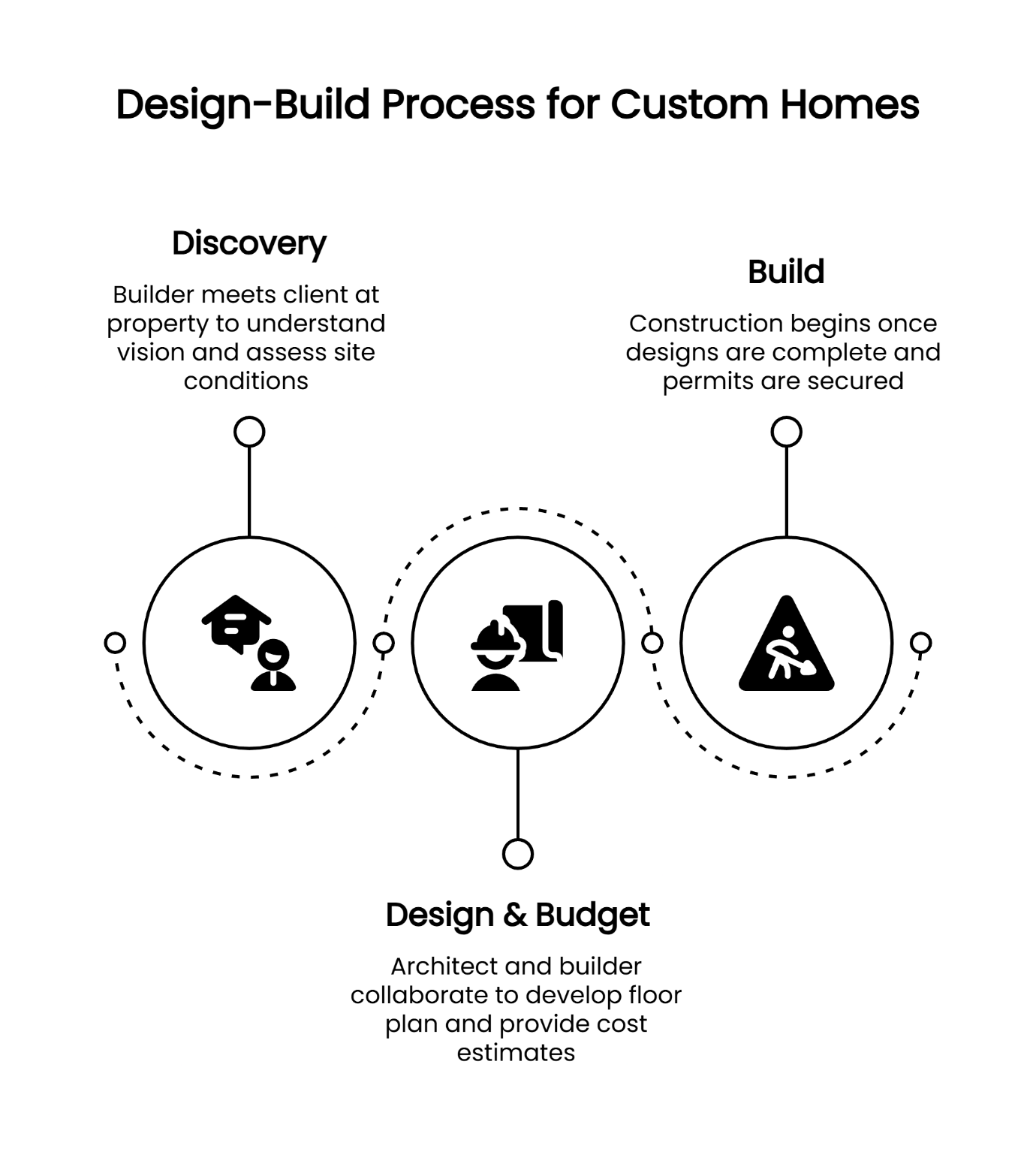
Discovery starts on your property. The builder meets you at your lot to understand your vision, assess site conditions, and discuss realistic budget expectations. For many Texas Hill Country builds, this means evaluating practical realities like rock, slope, and drainage—constraints that can shape cost and constructability before a single line is drawn. This isn't a sales pitch. It's a feasibility conversation.
Design & Budget is where most of the coordination magic happens. Instead of designing in isolation, the architect and builder work together. As the floor plan develops, the builder provides ongoing cost estimates. You find out during design—not after—whether that covered outdoor living space fits your budget. If it doesn't, you adjust while changes are still simple and inexpensive.
Build begins once designs are complete and permits secured. Because the team already understands your vision and budget, construction moves faster with fewer surprises. The builder who helped shape the plans is the same one swinging hammers.
The key mechanism: pricing feedback during design. You're never handed a completed set of plans only to discover they cost twice what you expected.
Design-Build vs. Design-Bid-Build: What Changes for You
The traditional design-bid-build approach separates the process into distinct, sequential steps. You hire an architect, pay for complete construction documents, then send those plans to multiple builders for competitive bids. It sounds logical—more bids should mean better prices, right?
In practice, this separation creates gaps. The architect designs without real-time cost input. The winning bidder may have won by excluding scope or using lower allowances. And when problems arise during construction, the architect and builder often retreat to their separate contracts to assign blame.
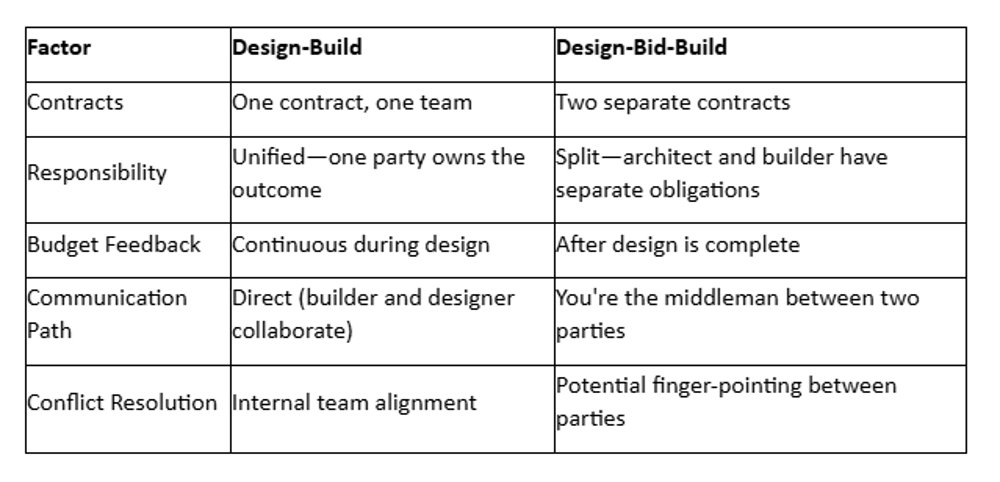
Neither method is universally "better." Design-bid-build can work well when you have a clear, fixed design and want maximum price competition. Design-build tends to serve homeowners better when the project is complex, the site has challenges, or you value collaboration and clarity over the lowest possible bid.
A practical example: imagine a late change—adding a larger covered outdoor area. In design-build, the team can respond with tighter clarity on how that change affects structure, materials, and timeline as the decision is made. In design-bid-build, the same question may require re-pricing and re-coordination across separate parties, with results varying based on how complete the documents and bid scope are.
When Design-Build Is a Great Fit (and When It May Not Be)
Design-build works particularly well when:
Your site has challenges. Hill Country lots often involve rock, steep slopes, drainage considerations, or LCRA regulations. A unified team can navigate these constraints during design rather than discovering costly surprises during construction.
You want budget guardrails. If knowing your costs throughout the process matters more than chasing the absolute lowest bid, design-build's continuous estimating provides that security.
You value collaboration. Some homeowners enjoy being part of the creative process. Design-build makes that easier because everyone's working from the same playbook.
Your timeline matters. Because design and preconstruction planning overlap, design-build projects often move faster. One client noted that the builder "made it easy and fun to watch our designs come to life"—a far cry from the stressful coordination nightmares many people expect.
Design-build may not be the best fit if:
You want to manage the project yourself. Owner-managed builds with separately hired trades require a different skill set and risk tolerance.
Your primary goal is the lowest possible price. Competitive bidding can drive down costs, though often at the expense of scope clarity or allowance transparency. If price is your only criterion, you may prefer the traditional bid process—just go in with realistic expectations about coordination challenges.
There's no shame in either approach. The key is matching the method to your priorities.
9 Questions to Ask Any Design-Build Firm Before You Sign
Before committing to a design-build partnership, these questions help you evaluate whether a firm operates with the transparency and process discipline that prevents surprises:
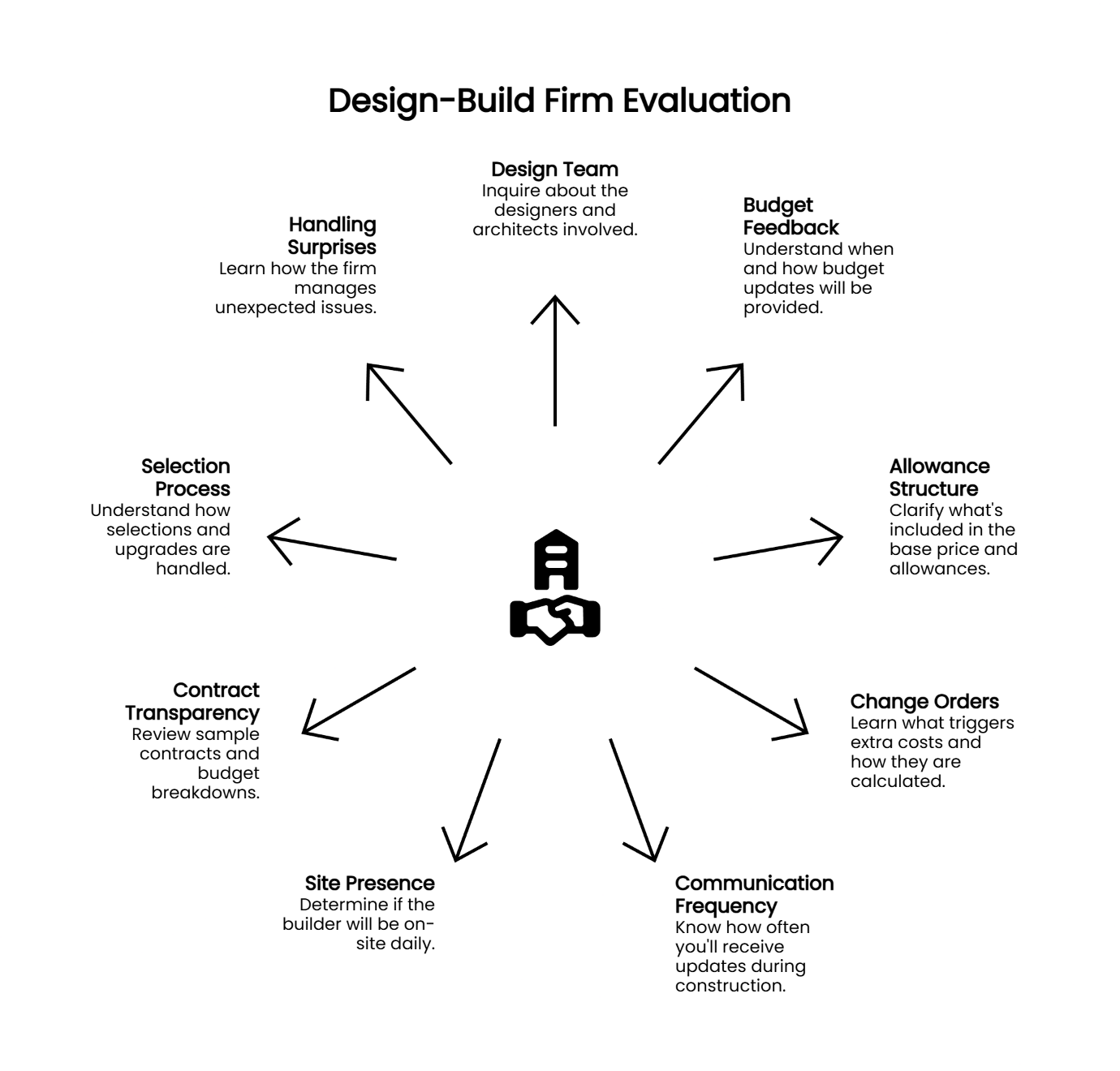
Who handles the design? Do they have in-house designers, or do they partner with specific architects? Meet the design team.
When do I get budget feedback? Look for continuous estimating during design, not a single number at the end.
How are allowances structured? Ask for specifics. What's included in the base price versus what's an allowance? Are allowances realistic for the finishes you want?
What triggers a change order? Understand what decisions will cost extra and how those costs are calculated.
How often will we communicate during construction? Weekly updates? A client portal? Know the cadence before you start.
Will you be on my job site daily? Smaller builders who limit their project count can often provide more hands-on management.
Can I see a sample contract and budget breakdown? Transparency before signing predicts transparency during the build.
What's your approach to selections and upgrades? Some builders lock you into their vendors; others let you shop around.
How do you handle the unexpected? Rock, weather delays, supply chain issues—every project has surprises. How they respond tells you a lot.
A builder confident in their process will welcome these questions. Evasive answers are a red flag. Clarity now is usually cheaper than confusion later.
Common Pitfalls to Avoid When Choosing Design-Build
Even with a unified team, certain mistakes can undermine the benefits of design-build:
Assuming early sketches equal final price. Preliminary designs come with preliminary budgets. Insist on checkpointed estimating—formal budget updates at key design milestones—so you're never shocked by the final number.
Leaving allowances vague. Vague allowances create surprise bills. A low base price means nothing if the allowances are unrealistically low. Ask to see the allowance schedule and compare it against actual costs for the finish level you want.
Comparing proposals without scope parity. If you're evaluating multiple design-build firms, make sure you're comparing equivalent scope. One proposal may look cheaper because it excludes landscaping, permits, or realistic appliance budgets. Use a scope checklist to normalize comparisons.
For a deeper look at how unified accountability prevents budget drift, read Stop the Finger-Pointing: How Design-Build Delivers Your Custom Home On Budget.
Design-Build Questions Homeowners Ask
Is design-build cheaper than traditional building?
It depends on how you define "cheaper." Design-build isn't inherently less expensive, but it often prevents the cost overruns that plague fragmented projects. Because budget feedback happens during design, you're less likely to finalize plans you can't afford. The savings come from fewer surprises, not from a lower starting price.
Can I still use my own architect with a design-build firm?
Often, yes—depending on the firm's structure and contract model. Many design-build firms have established architect partnerships, but some will work with outside designers if there's good chemistry. Ask early, and confirm who is responsible for coordination and how pricing feedback flows. Bringing your own architect may change the accountability structure that makes design-build effective, so clarity on these points matters.
How does budgeting work in a design-build contract?
Typically, you'll agree on a target budget early. As design progresses, the builder provides updated estimates at key milestones. By the time construction documents are complete, you should have a firm fixed price or a detailed cost breakdown with clearly defined allowances. The goal is no surprises at contract signing.
How do I compare proposals from different design-build firms?
Focus on scope parity first. Are both proposals including the same square footage, finish level, site work, and allowances? Then evaluate process: How do they handle budget checkpoints? What's their communication cadence? Finally, assess chemistry and trust—you'll be working closely with this team for months.
What should I look for in a design-build contract?
Look for clear language on: scope of work, allowance amounts and what they cover, change order procedures, payment schedule, timeline with milestones, warranty terms, communication cadence, and who serves as your primary point of contact. If something is vague, ask for clarification before signing.
Your Next Step: Clarity on Site, Budget, and Timeline
The right delivery method won't guarantee a perfect build, but it dramatically improves your odds of a smooth one. Design-build works by replacing coordination anxiety with a single point of accountability—one team that owns both the vision and the execution.
If you're considering a custom home in the Texas Hill Country, the most valuable next step isn't choosing a builder. It's getting clarity on your specific situation: What can your lot support? What does your budget realistically allow? What timeline makes sense for your life?
That clarity starts with a conversation. Explore Riverbend Homes' process to see how the Discover → Design & Budget → Build framework works in practice. You can also browse testimonials from past clients or see where we build throughout the Hill Country. When you're ready, a Discovery Meeting on your property can answer the questions that matter most—before you commit to anything.
As one homeowner put it: "He will keep you on budget and on time with no surprises." That's not a guarantee anyone can make. But it's the outcome a good process is designed to deliver.
Sources
Design-Build Institute of America, What Is Design-Build?
American Institute of Architects, A Primer on Project Delivery Terms
Disclaimer: This guide is intended as a comprehensive starting point. For decisions specific to your unique situation, we always recommend consulting a qualified professional.
Our goal is to provide helpful, accurate information for Texas Hill Country homeowners. Every article is reviewed for clarity and alignment with real-world building considerations, using a mix of hands-on experience, internal checklists, and reputable third-party references when appropriate.
By: The Riverbend Homes Insights Team
The Riverbend Homes Insights Team is our dedicated group responsible for translating complex building topics into clear, helpful guides. While our content is thoroughly reviewed for clarity and accuracy, it is for informational purposes and should not replace professional advice.