

📌 Key Takeaways
Walking away from the wrong builder protects both your budget and your peace of mind during what should be an exciting journey.
Pressure Signals Weakness: Builders who manufacture urgency with same-day discounts or "almost booked" claims reveal insecurity, not professionalism—confident experts give you space to think.
The Lot Walk Is Non-Negotiable: Hill Country terrain drives costs more than finishes do, and any builder offering detailed pricing without physically visiting your sloped, rocky, or lakeside property is guessing.
Vague Money Talk Predicts Surprise Bills: When a builder can't explain allowances and change-order processes in plain English upfront, you'll face uncomfortable budget conversations mid-build.
Local Experience Prevents Expensive Learning Curves: HOA restrictions, septic permits, well regulations, and view-oriented design require hands-on Hill Country expertise that generic suburban builders simply don't possess.
Daily Oversight Determines Quality: Builders who won't commit to on-site management or regular communication rhythms create the frustration homeowners complain about most—feeling uninformed throughout a 12-18 month process.
Spotting these patterns early means you can exit gracefully and find a partner who earns your trust through transparency, not tactics.
Families planning custom homes in the Texas Hill Country will gain clarity here, preparing them for the detailed red-flag analysis and practical response strategies that follow.
You're driving home from a builder meeting, replaying the conversation in your head. Something felt off, but you can't quite put your finger on it. The builder seemed friendly enough, the photos looked impressive, and the initial numbers were tempting. Still, that nagging feeling won't go away.
Trust that instinct.
When you're planning to build your dream home in the Texas Hill Country, the stakes are too high to ignore warning signs. Unlike buying an existing home, custom building means committing to a months-long partnership with someone who'll be making hundreds of decisions that affect your daily life for decades. The terrain here adds another layer of complexity—sloped lots, HOA restrictions, septic systems, water access, and view corridors all require specific expertise that not every builder possesses.
This guide identifies seven specific red flags that should make you pause, reconsider, and potentially walk away. More importantly, it gives you the language to exit these conversations gracefully and the framework to find a builder who truly understands the Hill Country lifestyle you're pursuing.
Quick-Scan Checklist
Before diving deep, here's your at-a-glance reference for early warning signs:
Pressure to sign immediately with expiring discounts
Proposal offered before visiting your actual lot
Vague answers about allowances and change orders
Unclear about HOA requirements or permit processes
Limited local portfolio or Hill Country experience
No plan for daily oversight or communication rhythm
Focus on criticizing other builders rather than explaining their own process
The 7 Red Flags—What to Watch For
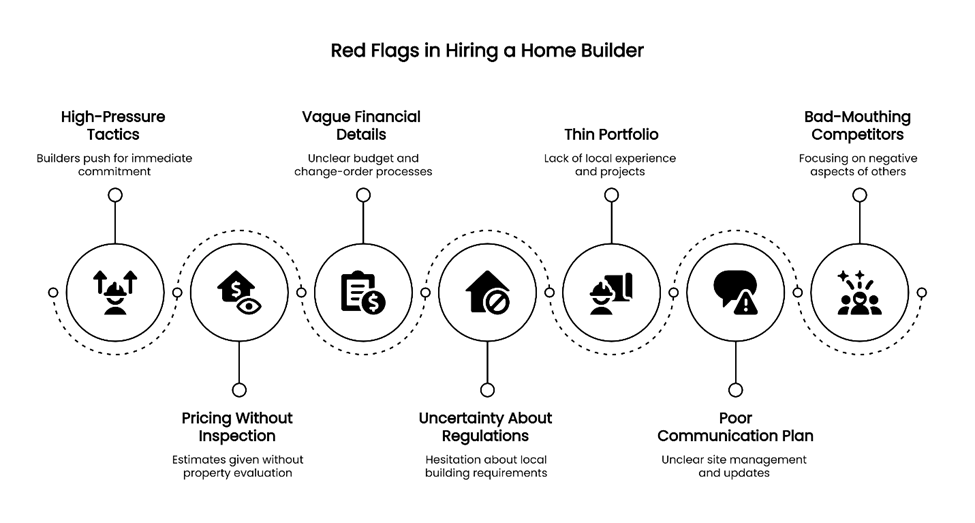
1. High-Pressure Sign-Now Tactics
What you'll hear: "We're almost booked out for the year," or "This pricing is only good if you sign today," or "Another family is looking at this same timeline."
These tactics create artificial urgency. While good builders do maintain schedules and sometimes need deposits to hold time slots, they don't manufacture pressure. A builder confident in their work knows that thoughtful families need time to make informed decisions.
Why it matters in the Hill Country: Building here isn't just about square footage and finishes. Your property's specific characteristics—the slope, the view orientation, access challenges, utility availability—require careful planning. Rushing this step-by-step hiring process often leads to expensive oversights.
What a safer alternative looks like: Professional builders outline their typical timeline, explain their current project load, and give you space to think. They might say, "We typically schedule discovery meetings two to three weeks out. Take whatever time you need to review our portfolio and speak with past clients."
How to respond: "We're taking a thoughtful approach for this investment. We'll circle back after we've had time to review everything." Then actually take that time.
2. No Lot Walk Before Numbers
What you'll see: A builder offers to provide pricing based solely on photos, drone footage, or your lot description. They skip the crucial step of physically walking your land before discussing costs.
Hill Country building costs can swing dramatically based on factors invisible in photos. The grade of your slope, soil composition, existing tree coverage, and sight lines to maximize views all impact both budget and design possibilities. A builder who hasn't walked your lot is essentially guessing.
Why it matters: Septic system placement, well drilling potential, utility runs, and driveway grading all depend on on-site evaluation. A proposal without this assessment is built on assumptions, not reality.
What a safer alternative looks like: Experienced Spicewood custom home builders insist on a discovery meeting at your property before discussing numbers. They'll walk the boundaries, note elevation changes, identify utilities, discuss HOA view corridors, and ask about your vision for indoor-outdoor living spaces.
How to respond: "We'd prefer to have you visit the lot before we talk about pricing. When can we schedule that?" If they resist, that's your answer.
3. Vague or Shifting Answers About Budget, Allowances, and Change Orders
What you'll hear: Unclear explanations about what's included in the base price versus allowances. Fuzzy language around change order processes. Reluctance to document scope in writing. Phrases like "We'll figure it out as we go" or "Don't worry about the details now."
Money conversations should be straightforward, not mysterious. Industry educators consistently point out that vague allowances are a common reason budgets run over, because realistic material costs only show up late in the process when it's harder to adjust course.
Why it matters: This is where surprise bills originate. If a builder can't clearly explain their allowance system—what's covered for flooring, fixtures, appliances, landscaping—you're likely to face uncomfortable conversations when selections exceed unstated limits. The lowest initial bid often hides the most gaps.
What a safer alternative looks like: Professional builders provide detailed scope documents. They explain exactly what their allowances cover, how change orders are priced and approved, and what happens when you want to upgrade beyond the standard package. The National Association of Home Builders' model contracts include written change-order forms that spell out scope, cost, and schedule changes—that's the level of clarity you should expect. They welcome these questions to bring to every meeting.
How to respond: "Can you walk me through a sample allowance breakdown from a recent project? How do you handle it when clients want to make changes mid-build?" Listen for specificity.
4. Fuzzy on HOAs, Permits, Septic Systems, Wells, or Local Utilities
What you'll notice: Uncertain responses about architectural committee requirements, vague timelines for permit approvals, unclear about septic design regulations, or unfamiliar with local utility hookup processes.
The Hill Country presents unique infrastructure challenges. Many properties require septic systems rather than city sewer, well water instead of municipal supply, and creative solutions for power access. The Texas Commission on Environmental Quality regulates on-site sewage facilities and requires permits and approved system designs in many areas. For properties with existing wells, state agencies emphasize the importance of proper maintenance or plugging of abandoned wells to protect groundwater and prevent safety hazards. HOAs around Lake Travis and Lake LBJ often have strict rules about view corridors, height restrictions, and architectural styles.
Why it matters: These factors directly impact what you can build, how long it takes, and what it costs. A builder unfamiliar with local requirements will face delays, require expensive modifications, or deliver a home that doesn't meet your vision because they didn't understand the constraints upfront.
What a safer alternative looks like: Experienced local builders discuss these topics confidently and specifically. They know which counties require engineer-stamped septic designs, typical permit timeline variations, and how to navigate architectural review boards. They've worked through these processes dozens of times.
How to respond: "What's your experience with [specific HOA/county/utility district] requirements? Can you describe a recent project where you navigated similar constraints?"
5. Thin or Non-Local Portfolio
What you'll see: Few completed projects in the Hill Country region. Difficulty providing references from Horseshoe Bay, Spicewood, or lakeside communities. A portfolio dominated by work from other regions with different building requirements.
General building skills matter, but Hill Country expertise is specific. The terrain, climate, and lifestyle considerations here differ significantly from flat urban developments or other Texas regions. View-focused design, managing steep grades, and understanding the local building ecosystem require hands-on experience.
Why it matters: You need a builder who understands how to orient your home to capture sunset views over the lake, how to design for the area's occasional freeze events, and who has relationships with local subcontractors familiar with Hill Country challenges.
What a safer alternative looks like: Review portfolios featuring local projects. Ask to visit completed homes if possible, or speak with homeowners about their building experience. A strong local presence usually means established relationships with quality tradespeople and familiarity with the area's specific requirements.
How to respond: "Can you share examples of homes you've built on sloped lots similar to ours? May I contact those homeowners to ask about their experience?"
6. No Clear Communication Cadence or On-Site Management Plan
What you'll hear: Vague promises to "stay in touch" or "keep you posted." No specific answer about who will be on-site daily. Unclear about their current project load. Reluctance to commit to regular update schedules.
Building a custom home is a long journey—typically twelve to eighteen months from first meeting to move-in. Without consistent communication and daily oversight, small problems compound into expensive fixes. This extended timeline means you need a partner who manages it actively, not reactively.
Why it matters: Builders who take on more projects than they can personally oversee often rely on sporadic site visits. This creates quality control gaps, slows progress, and leaves you uncertain about status. The most common frustration homeowners report isn't about the final product—it's about feeling uninformed during the process.
What a safer alternative looks like: Professional builders clearly outline their management approach. They explain their typical project load, confirm they'll be on-site daily, and establish a communication rhythm—whether that's weekly calls, photo updates, or milestone meetings. They treat transparency as standard practice. Review the process to understand what daily involvement looks like.
How to respond: "How many projects do you typically manage simultaneously? Who will be on our site daily, and how often will we receive updates?"
7. Bad-Mouthing Every Competitor Instead of Explaining Their Own Process
What you'll hear: Extended criticisms of other local builders, warnings about "everyone else" cutting corners, or vague accusations about industry-wide problems—without explaining what they do differently.
Deflection is often a cover for insecurity. While it's reasonable for builders to differentiate themselves, constantly criticizing competitors without offering substance about their own approach suggests they're trying to win on fear rather than merit.
Why it matters: You need to understand what makes a builder capable, not just what makes others supposedly inadequate. Negative campaigning doesn't tell you whether this builder has the expertise, systems, and integrity your project requires.
What a safer alternative looks like: Confident builders focus on explaining their process, showcasing their work, and connecting you with satisfied clients. When they do mention industry challenges, they frame them constructively and explain their specific solutions. They welcome informed comparison shopping.
How to respond: "I appreciate the context, but I'd like to understand more about your specific approach. Can you walk me through how you handle [budget management/quality control/timeline challenges]?"
What to Do Instead: Your Safer Path Forward
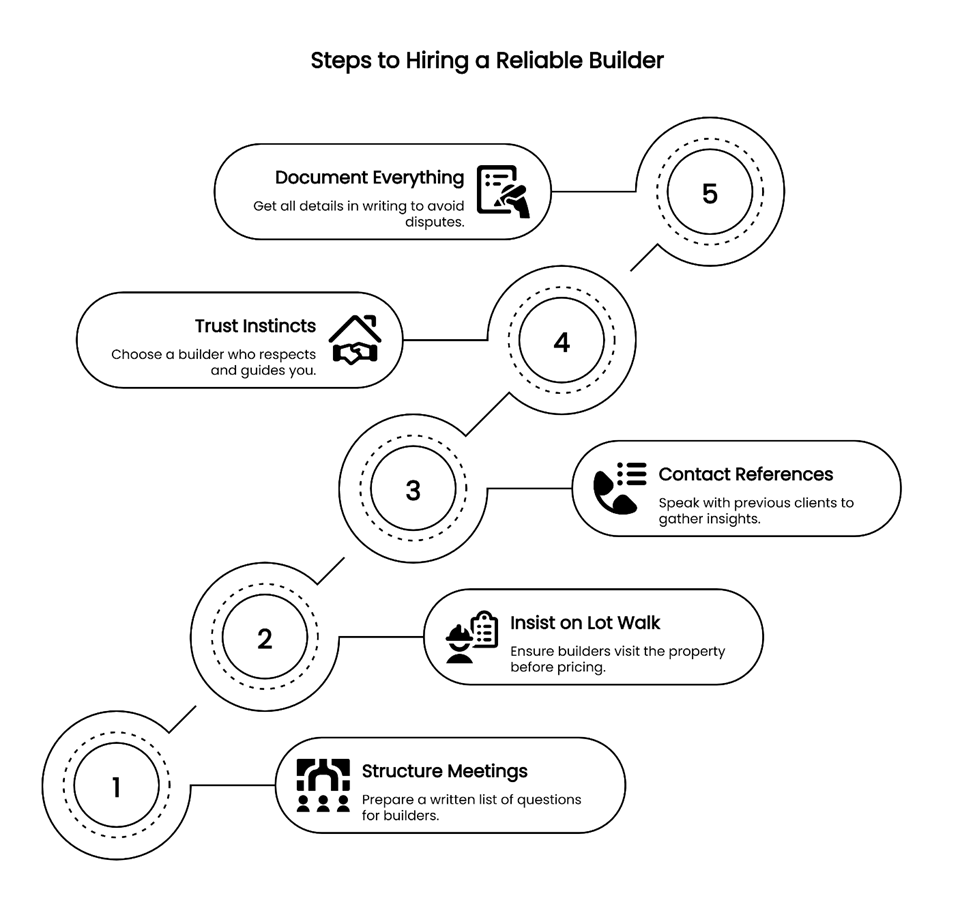
Recognizing red flags is only half the solution. Here's what to do when you spot warning signs—or better yet, how to avoid problematic builders altogether.
Bring structure to every discovery meeting. Don't rely on casual conversation to uncover the information you need. Prepare a written list of questions covering money, process, timeline, communication, and local expertise. Take notes. Compare answers across multiple builders.
Insist on the lot walk before detailed pricing. Make this non-negotiable. Any builder who resists visiting your property before providing numbers isn't serious about accuracy. The discovery meeting at your land is where you learn whether they truly understand Hill Country building challenges.
Request references and actually contact them. Ask for homeowners who built on similar lots or in similar communities. Prepare specific questions about communication, budget management, problem-solving, and the final result. People who've been through the process will tell you what the sales conversation won't.
Trust your instinct about respect and pressure. Building a custom home should feel exciting, not stressful. If a builder makes you feel rushed, confused, or inadequate for asking questions, that dynamic will only worsen over the months ahead. You deserve clear answers and patient guidance.
Document everything in writing. Verbal assurances mean nothing when disputes arise. Get scope details, allowance breakdowns, change order processes, and timeline commitments in writing. Professional builders expect this and provide it proactively.
For a comprehensive framework on what to evaluate throughout the hiring process, review our complete guide on custom home builders in the Texas Hill Country.
Print This: 7 Red Flags Mini-Checklist
Use this quick reference when meeting with potential builders. Check any that apply, and consider them discussion points or reasons to pause.
⚠️ Pressure tactics – demands to sign immediately or expiring "special" pricing
⚠️ Skips lot walk – offers pricing without visiting your property
⚠️ Vague money talk – unclear about allowances, change orders, or scope
⚠️ Fuzzy on local requirements – uncertain about HOAs, permits, utilities, septic/wells
⚠️ Thin local portfolio – few completed Hill Country projects to reference
⚠️ No oversight plan – vague about on-site presence or communication rhythm
⚠️ All criticism, no substance – focuses on attacking competitors rather than explaining their process
Notes:
Bring this to your discovery meetings. Trust your observations.
Frequently Asked Questions
Is it normal for a builder to push me to sign right away?
No. While builders do maintain schedules and sometimes need deposits to hold project slots, creating artificial urgency through expiring discounts or claims that "other families are waiting" is a pressure tactic, not a professional practice. Thoughtful builders understand that custom home decisions require time and give you space to make informed choices.
Should I expect a proposal before a lot walk?
Never accept detailed pricing before a builder visits your actual property. Hill Country lots vary dramatically in buildability, utility access, and site preparation needs. Any proposal offered without a physical site evaluation is based on assumptions that will likely prove inaccurate, leading to change orders and budget surprises later.
How do allowances and change orders really work?
Allowances are budget placeholders for items you'll select later—flooring, fixtures, appliances, landscaping. A professional builder specifies exactly what each allowance covers and what happens when you exceed it. Change orders are formal modifications to the original scope, priced and approved in writing before work proceeds. Industry model contracts, like those from the National Association of Home Builders, use written change-order forms that clearly describe the change, cost, and schedule impact—that's the level of documentation you should expect in plain English. Both should be clearly explained and documented from the start.
What Hill Country-specific questions should I ask first?
Focus on local expertise: Ask about their experience with properties in your specific area, how they handle sloped lots and view orientation, their familiarity with your HOA or county requirements, and their approach to septic systems or well water if applicable. Request examples of similar projects they've completed and references you can contact.
Purpose & Scope
This guide is intended as a comprehensive starting point for homeowners beginning their search for a custom home builder in the Texas Hill Country. The red flags identified here represent common patterns observed across the residential construction industry and are offered as educational guidance to help you ask better questions and make more informed decisions.
However, every building project and every builder relationship is unique. The specific challenges of your lot, your budget constraints, your timeline, and your design vision all create variables that require personalized evaluation. For decisions specific to your situation—including contract terms, project scope, and builder selection—we always recommend consulting with qualified professionals and conducting thorough due diligence.
Building your dream home should be an exciting journey, not a stressful gamble. By recognizing warning signs early, asking direct questions, and insisting on transparency, you protect both your investment and your peace of mind.
Ready to start your Hill Country custom home journey with a builder who values transparency?
Schedule a discovery meeting or lot walk with our team. We'll visit your property, discuss your vision, and give you straightforward answers to every question—no pressure, no surprises.
Call us: (512) 468-0240
Visit: Contact Riverbend Homes
Riverbend Homes
21413 Vista Estates Drive
Spicewood, TX 78669
Explore more about where we build in the Texas Hill Country or read testimonials from families who've built their dream homes with confidence.
Disclaimer: This article is intended for educational and informational purposes only. It does not constitute legal, financial, or professional advice. Building codes, regulations, and best practices vary by location and change over time. Always consult with licensed professionals—including contractors, attorneys, and financial advisors—for guidance specific to your project and circumstances.
Our Editorial Process
Our expert team uses AI tools to help organize and structure our initial drafts. Every piece is then extensively rewritten, fact-checked, and enriched with first-hand insights and experiences by expert humans on our Insights Team to ensure accuracy and clarity.
About the Riverbend Homes Insights Team
The Riverbend Homes Insights Team is dedicated to helping families navigate the custom home building process in the Texas Hill Country with clarity and confidence. Drawing on decades of combined experience in residential construction, our team provides practical guidance on everything from lot selection to builder evaluation, always prioritizing transparency and homeowner education. Our mission is simple: to empower you with the knowledge needed to make informed decisions about one of life's biggest investments.