

Hiring a Custom Home Builder in the Texas Hill Country: How HOAs, Permits and Utilities Reveal True Local Expertise
📌 Key Takeaways
Building a custom home in the Texas Hill Country starts long before you break ground—it starts with choosing a builder who truly knows the land.
HOAs, Permits, and Utilities Are Your Builder Litmus Test: The way a builder discusses these "boring" topics reveals whether they have genuine local experience or are simply hoping to figure things out along the way.
View Corridors Can Make or Break Your Design: Hill Country HOAs often protect sightlines for neighboring homes, and a builder who doesn't ask for these guidelines upfront may leave you facing costly redesigns after plans are already drawn.
Septic and Well Planning Drives Your Timeline: Because permit applications often depend on completed septic designs, a builder unfamiliar with local soil conditions and county processes can stall your entire project before construction even begins.
Utilities Require Proactive Planning, Not Afterthoughts: Rocky terrain, long driveways, and co-op coordination can add significant costs—builders who raise these issues during the first lot walk demonstrate the foresight that prevents budget surprises.
The Right Questions Separate Experts from Guessers: Asking builders about their HOA experience, permit sequencing, and utility planning approach quickly distinguishes those with deep Hill Country knowledge from those offering vague reassurances.
Local expertise isn't a luxury—it's what protects your views, your budget, and your timeline from the start.
High-income families planning a custom home in the Texas Hill Country will gain a clear framework for evaluating builders here, preparing them for the detailed guidance on HOAs, permits, and utilities that follows.
Floor plans get all the attention. So do countertops, views, and that perfect covered patio you've been picturing for years. But here's what most families don't realize until it's too late: the projects that blow up on budget and timeline rarely fail because of finishes. They fail because of what was missed underground, in the HOA packet, or at the county office.
HOAs, permits, septic systems, wells, and utilities sound dry. They feel like paperwork. But in the Texas Hill Country, these "boring details" quietly control three things that matter deeply to you: what you can actually build on your lot, how long the project will realistically take, and whether your budget survives contact with reality.
The good news? These same topics give you a fast, practical way to evaluate any builder you're considering. The way a builder talks about HOAs, permits, and utilities during your first conversations reveals whether they've done this many times before in places like Spicewood, Horseshoe Bay, or along Lake Travis and Lake LBJ—or whether they're just hoping to figure it out as they go.
Think of hiring a custom home builder like choosing a guide for a backcountry trip. You want someone who knows every trail, storm pattern, and hidden obstacle—not just someone who has read a map. HOAs, permits, and utilities are some of those hidden obstacles. A builder who navigates them comfortably is a builder who can protect your dream home from the start.
How Hill Country HOAs and Architectural Committees Shape What You Can Build
If your lot sits within a homeowners association, the HOA's architectural guidelines will influence your home before you ever break ground. Most Hill Country HOAs care deeply about preserving views, maintaining neighborhood character, and ensuring consistent quality. That means they often have opinions about height limits and rooflines, view corridors that affect where and how tall you can build, minimum square footage requirements, approved exterior materials and colors, setbacks from property lines, driveway placement, fencing styles, and outbuildings.
None of this is meant to frustrate you. These rules exist because the Hill Country's rolling terrain and scenic views are exactly why everyone wants to live here. The HOA wants to protect that character for all homeowners, including you.
What does a builder with true local expertise do differently? They ask for your HOA documents upfront, often before the first real design conversation. They talk specifically about communities where they've navigated architectural review—mentioning realistic timelines and common sticking points they've encountered in areas like Horseshoe Bay or neighborhoods around Lake LBJ. They design with HOA guidelines already in mind, rather than hoping for approval later.
Consider what can happen when that local knowledge is missing. A couple buys a beautiful lot with a distant lake view. Builder A glances at the property and says, "The HOA process is pretty standard—we'll handle it." There's no mention of view corridors or height limits. Builder B walks the lot with the owners, asks for the HOA guidelines, and points out that the community protects certain view corridors from neighboring homes. This builder explains how that might influence roof height, second-story decks, and tree removal, then suggests confirming expectations with the architectural committee before finalizing the design.
Months later, the couple who chose Builder A discovers that their planned second story conflicts with a protected view corridor, forcing a costly redesign. The couple who chose Builder B already designed within HOA expectations and moves smoothly into construction. Both families have HOAs. The difference is how early and clearly their builder brought those rules into the conversation.
When you're interviewing builders, listen carefully. A builder who says "we always get quick approvals" without any nuance is giving you a vague promise. A builder who says "in this neighborhood, the committee typically meets monthly, and they tend to focus on roofline compatibility and exterior materials—so we'd design with that in mind from day one" is showing you real experience.
For more on how view corridors and terrain shape design choices, you may find it helpful to explore guidance on designing for the view in your Hill Country custom home.
Permits, Septic and Wells: The Hidden Engine of Your Build Timeline
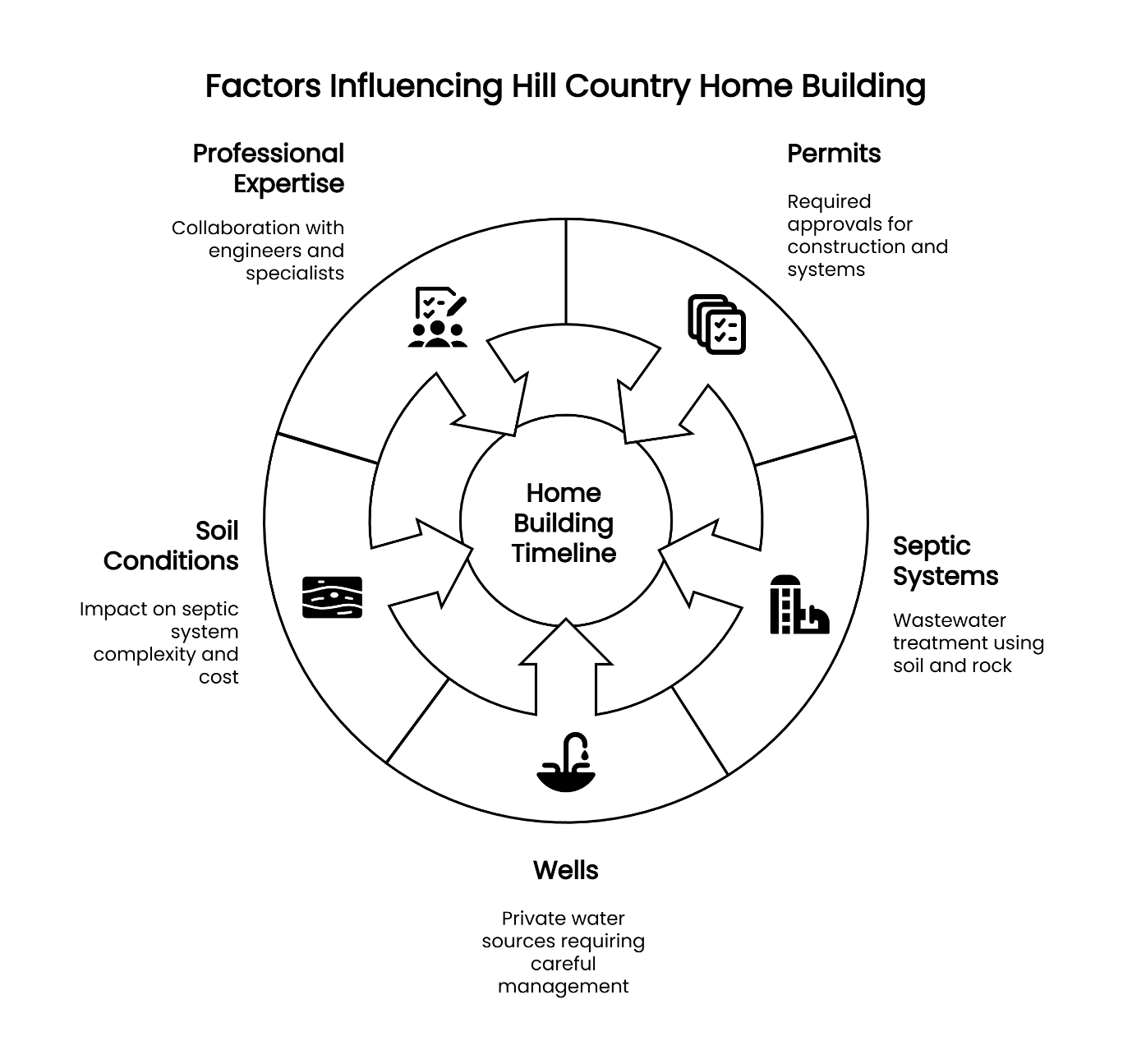
Beyond HOA approval, your Hill Country custom home will require permits, and often involves septic system design and well drilling. Different counties and jurisdictions have different processes and lead times, so local familiarity becomes genuinely valuable here.
A typical permit sequence might include building permit applications, septic system evaluation and permitting, well drilling approvals if you're not on municipal water, driveway and access reviews, and sometimes floodplain or tree-related considerations depending on your lot. The order matters because some steps depend on others. Septic design, for instance, requires soil testing and an understanding of where the home will sit. Permit applications often can't move forward until the septic plan is complete.
In many rural and semi-rural Hill Country areas, septic systems use the soil and rock beneath the property to treat wastewater before it returns to groundwater. When soil conditions are challenging—rocky terrain, steep slopes, or clay-heavy soil—the system design can become more complex and more expensive. The EPA's septic systems overview provides helpful background on how these systems function and why site conditions matter so much.
Private wells also require careful attention. Well location, drilling depth, and ongoing maintenance all affect drinking water quality over time. The EPA's guidance on private drinking water wells explains what homeowners should understand about protecting their water supply. An experienced Hill Country builder typically works closely with licensed engineers and septic or well specialists rather than guessing about what will be approved.
What should you listen for when discussing these topics? Calm, step-by-step explanations rather than rushed deflections. References to specific professionals they regularly partner with, such as septic designers, engineers, and surveyors. Honest acknowledgment that timelines can vary based on soil conditions, rock, and how busy the county happens to be—paired with a clear plan for managing those variables.
A builder who brushes off permit questions or promises exact timelines without caveats may not have enough experience with the realities of Hill Country building. For a broader look at how builders coordinate with agencies and handle regulatory requirements, you might also explore how design build firms handle permits and regulations.
Power, Water, Internet and More: Designing Your Home Around Real-World Utilities
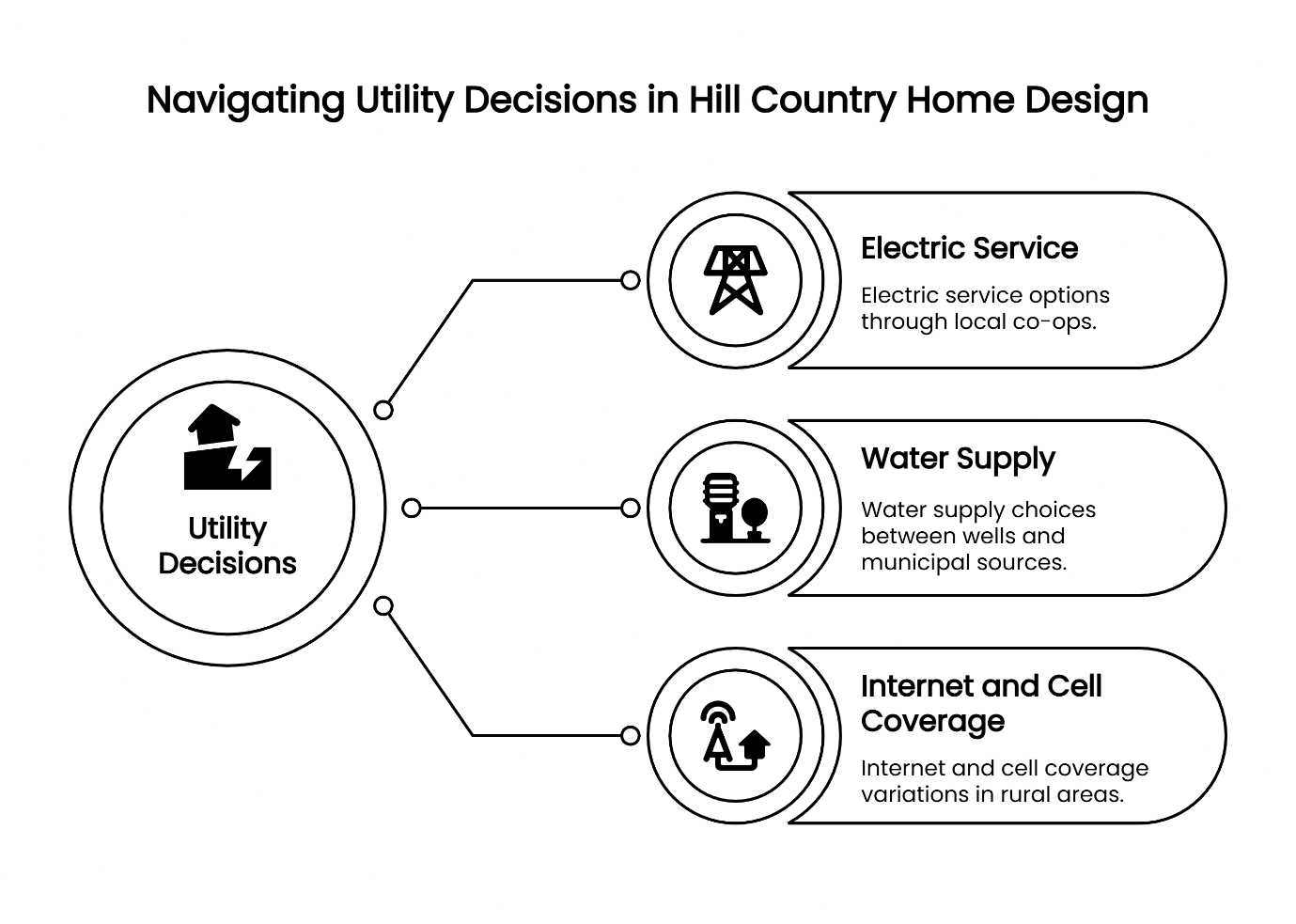
Utilities might seem like an afterthought—something that just gets figured out. But on many Hill Country lots, bringing power, water, and internet to your home site involves real decisions that affect both your budget and your design.
Common Hill Country utility scenarios include electric service through local co-ops, propane rather than natural gas, wells or municipal water depending on location, septic systems rather than sewer connections, and internet and cell coverage that varies significantly between rural and more developed areas.
The challenges often relate to distance and terrain. A long driveway means longer utility runs. Rocky soil can make trenching for buried lines expensive. Upgrading electrical service to handle a modern custom home sometimes requires coordination with the co-op months in advance. Easements can also affect where lines run and where you can place structures like gates or outbuildings.
A builder with local experience will raise these topics during your first lot walk—not as an afterthought once construction has begun. They'll talk through options like overhead versus buried power lines and explain the trade-offs in plain terms. They'll point out where costs might climb and help you budget realistically from the start. They'll also consider design implications, like where equipment should sit so it doesn't spoil your view.
Pay attention to whether a builder brings up utilities proactively or only responds when you ask directly. The former suggests someone who has learned these lessons before. The latter might indicate someone still learning on other people's projects.
When evaluating land options, many families find it helpful to read about selecting the perfect lot in Spicewood, TX, which touches on utilities, access, and site constraints before purchase decisions are made.
Questions to Ask Your Hill Country Builder About HOAs, Permits and Utilities
The questions below can plug directly into a broader builder interview checklist. Print them, screenshot them, or drop them into your notes app. Ask the same questions of every builder you meet so you can compare answers side by side.
HOAs and Architectural Committees
Which HOAs or architectural committees have you worked with in this area?
How early in the process do you like to review our HOA guidelines?
Can you walk us through a recent HOA review you've handled—what went smoothly and what required changes?
How do you design to protect our views while staying within HOA rules?
Permits, Septic and Wells
Who handles the permit paperwork and any meetings with the county—your team or us?
What's the typical sequence for septic, well, and building permits on a lot like ours?
How do you handle surprises if soil tests, rock conditions, or county requirements change what we planned?
Which specialists do you usually partner with for septic and well design?
What are some recent examples of how ground conditions or permit requirements changed a plan—and how did you handle it?
Utilities, Easements and Access
What do you look for when you first walk a lot to understand the utility situation?
How do you estimate the cost and timeline to bring power, water, and internet to the home site?
Are there utility-related issues you see often on Hill Country lots that we should budget for upfront?
Are there any visible easements, access issues, or drainage areas you'd want us to understand before finalizing the design?
How do you help clients think through everyday life—parking, deliveries, guests, and trash service—when planning driveways and access?
When a builder answers these questions with specific examples, realistic timelines, and calm confidence, you're likely talking to someone with genuine Hill Country experience. When answers feel vague or dismissive, trust that instinct.
How Local Expertise Protects Your Views, Budget and Timeline
HOAs, permits, septic, wells, and utilities aren't glamorous. But they're where many "surprise" bills and frustrating delays originate. A builder who is fluent in these topics protects what matters most to you: your views, by working skillfully within HOA and terrain constraints; your budget, by planning for realistic utility and permit costs before construction begins; and your timeline, by anticipating steps and potential bottlenecks rather than reacting to them.
Two builders might both meet code. Both might have attractive portfolios. But only the one with deep local experience—the kind that shows up in how they talk about HOAs, septic systems, and power lines—can help you avoid the redesigns and surprises that derail so many custom home projects.
As you continue your search, consider pairing this mini-checklist with a full builder interview guide. When you're ready to walk your lot with someone who knows the Hill Country, custom home builders in the Texas Hill Country like Riverbend Homes offer discovery meetings designed to help you understand your land, your options, and what a realistic plan looks like—before you commit to anything.
To keep learning about how a custom build unfolds from first conversation to move-in, you may also want to explore key milestones in your custom home journey.
The families who feel calmest during their builds are usually the ones who chose a builder based on local expertise, not just the lowest bid. Now you know exactly how to spot the difference.
This guide is intended as a comprehensive starting point. For decisions specific to your unique situation, we always recommend consulting a qualified professional, your HOA, and the relevant local authorities.
Our Editorial Process
Our expert team uses AI tools to help organize and structure our initial drafts. Every piece is then extensively rewritten, fact-checked, and enriched with first-hand insights and experiences by expert humans on our Insights Team to ensure accuracy and clarity.
About the Riverbend Homes Insights Team
The Riverbend Homes Insights Team is our dedicated engine for synthesizing complex topics into clear, helpful guides. While our content is thoroughly reviewed for clarity and accuracy, it is for informational purposes and should not replace professional advice.
Riverbend Homes is a custom home builder based in the Texas Hill Country, helping families design and build view-focused, lifestyle-friendly homes around Lake Travis, Lake LBJ, Horseshoe Bay, Spicewood, and surrounding communities.