

Shopping Allowance Autonomy: How to Choose Luxury Finishes Without Losing Budget Control
📌 Key Takeaways
Shopping allowance autonomy lets you pick the finishes you actually want while staying on budget—if your builder explains the rules upfront.
Transparency Beats Big Numbers: A generous allowance means nothing if you can't shop outside your builder's preferred vendors or don't know how credits and overages work.
Freedom Needs Structure: You can source finishes anywhere, but only if your builder knows what's coming, when it arrives, and how it fits the construction schedule.
Splurge Where You Live: Kitchen counters, primary bath tile, and main-area flooring deserve your best dollars because you'll see and touch them every day.
Track Spending in Real Time: Small upgrades add up fast—log each selection against its allowance before you fall in love with the next one.
Ask the Right Questions Early: Find out if you can shop independently, how savings flow back to you, and when selections must be final to avoid delays.
Real finish autonomy means curating your home, not just approving a catalog.
Homeowners planning custom builds in the Texas Hill Country will learn how to protect both style and budget here, preparing them for the detailed finish-selection process that follows.
~ ~ ~ ~ ~ ~ ~ ~ ~ ~ ~ ~ ~ ~ ~ ~ ~ ~
The tile samples are spread across the kitchen island. Twelve squares of marble, porcelain, and natural stone catch the afternoon light. This is the moment you've been waiting for—the moment your custom home stops being a floor plan and starts becoming yours.
Then the question surfaces. How much does this actually cost? And what happens if I fall in love with the wrong one?
Finish selection is where custom homes become personal. It's also where budgets can spiral if the allowance process isn't clear. The good news: you don't have to choose between the finishes you love and the financial control you need. The key is understanding how shopping allowances work—and finding a builder who gives you real autonomy within a transparent framework.
Why Finish Selection Feels So Exciting and So Risky
The moment the dream home starts feeling personal
For most of the custom home journey, you're working with abstractions. Site plans, elevations, structural drawings. Important, yes. But not exactly the stuff that makes your heart race.
Finishes are different. When you start choosing countertops for the kitchen, tile for the primary bath, flooring that will stretch through every room you walk through daily—suddenly the home feels real. You're not building a house anymore. You're building your house.
This is the phase where clients in Spicewood, Lake Travis, and across the Texas Hill Country start imagining actual mornings in their new space. The light on the backsplash. The feel of the floor under bare feet. The hardware they'll touch a hundred times a day.
Why many homeowners worry about markups and limited choices
The excitement comes with an edge of anxiety. You've heard the stories. Friends who wanted a specific faucet but were told they had to choose from a narrow catalog. Neighbors who discovered their "luxury" tile allowance wouldn't cover anything they actually liked. Clients who found out—too late—that the builder's preferred vendor charged thirty percent more than what they could have found on their own.
These aren't irrational fears. Many high-end builders do restrict clients to specific showrooms, sometimes with significant markups baked into the pricing. The result is a frustrating disconnect: you're building a custom home, but the finishes feel anything but custom.
What a Shopping Allowance Actually Means in a Custom Home Build
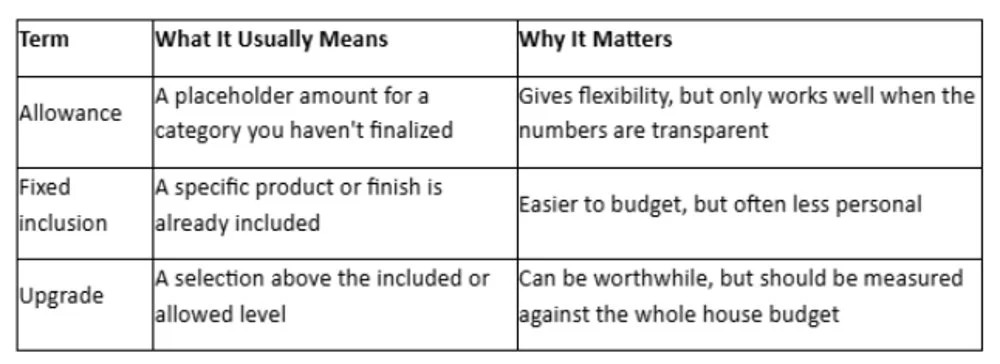
A shopping allowance is a budget placeholder for a category of finishes that hasn't been finalized yet. It's the dollar amount your builder has estimated for that category based on your overall project scope. Understanding this mechanism is the first step toward using it strategically.
Allowance vs. all-inclusive finish pricing
Some builders offer all-inclusive pricing, where finishes are pre-selected and bundled into the contract. You get less decision-making, but also less variability. Other builders use allowance-based pricing, which gives you a set dollar amount and the freedom to choose how to spend it.
Neither approach is inherently better. The question is whether the approach matches how involved you want to be—and whether the builder is transparent about how each model works.
What is usually covered and what is not
Allowances typically cover items that involve personal taste and visible design impact: kitchen and bath fixtures, lighting, flooring, tile, countertops, cabinet hardware, and sometimes appliances. They usually don't cover structural elements, framing, roofing, insulation, or mechanical systems. Those items are priced separately and aren't subject to the same selection process.
Understanding this distinction matters because it sets realistic expectations. Your allowance dollars are meant for the finishes that shape daily experience—not for the bones of the house.
Why transparency matters more than the allowance number alone
A generous allowance means little if you don't understand how it works. Can you shop beyond the builder's preferred vendors? What happens if you come in under budget—do you get a credit, or does the savings disappear? What happens if you exceed the allowance—how are overages handled, and when do you find out?
Builders who explain allowances clearly from the start are signaling something important: they want you to make informed decisions, not discover surprises at closing.
The Problem With Restrictive Showrooms and Builder-Grade Boxes

How limited choices can flatten the design vision
You didn't commission a custom home to end up with the same finishes as every other house in the neighborhood. But restrictive showroom policies can push you exactly there.
When builders limit selections to a single vendor or a narrow catalog, the options start blending together. The countertop choices look similar. The tile formats repeat. The lighting feels safe rather than inspired. The home that was supposed to feel uniquely yours starts feeling like a well-executed template.
Where markups and missed value often happen
Restrictive vendor relationships aren't always about quality control. Sometimes they're about margin. Preferred vendors may offer builders rebates or commissions, which can inflate the price you pay without adding value you receive.
This isn't universal—some vendor relationships genuinely benefit clients through volume pricing or streamlined coordination. But when you're not allowed to compare prices or source independently, it's worth asking why.
Why affluent buyers resent being boxed in
Budget-conscious doesn't mean unwilling to spend. It means unwilling to spend blindly. Affluent buyers building custom homes in places like Horseshoe Bay, Lake LBJ, or the broader Hill Country want to invest in quality. They simply want to know where their money is going—and they want the freedom to direct it toward finishes that actually matter to them.
Being told "you have to choose from this showroom" feels like a constraint that contradicts the entire premise of building custom. This is not just about price. It's about authorship. A custom home should not leave you feeling like a guest in your own selections.
How Shopping Allowance Autonomy Protects Both Style and Budget
Freedom to source the finish you actually want
Shopping allowance autonomy means you're not locked into a single source. If you find the perfect pendant lights at a design market in Austin, you can buy them. If a stone yard in Marble Falls has the exact slab you've been dreaming about, you can source it directly. If an online retailer offers the same faucet for significantly less, you're free to make that call.
This freedom transforms finish selection from a constrained checklist into an actual design process. You're curating your home, not just approving predetermined options.
One Spicewood client described the difference this way:
"He frequently found ways to save us money on our selections. Ben will give you a high end product and generous allowances for choices at a fair price. He will also allow you to shop around on your own for money saving deals, which others builders will not allow." — Chris S., Spicewood, TX
How savings can be reallocated across the house
When you find a better price on flooring, where does that savings go? With some builders, it vanishes into the project margin. With transparent builders, it flows back to you—either as a credit or as additional budget you can redirect elsewhere.
This reallocation creates a virtuous cycle. Savings on one category can fund an upgrade in another. The money you didn't spend on tile might cover the upgraded range hood you actually wanted. The lighting credit might stretch your countertop budget just enough to get the waterfall edge.
Why autonomy still needs builder coordination
Autonomy doesn't mean chaos. Sourcing your own finishes only works if your builder knows what's coming, when it's arriving, and how it integrates with the construction schedule.
The best approach is structured freedom: you have the latitude to shop, but you're doing it within a clear timeline and with ongoing communication. Your builder should know your selections early enough to coordinate installation, avoid delays, and flag any compatibility issues before they become problems.
This is why the design-build process matters. When the same team handles design and construction, they can provide real-time feedback on how your selections affect the schedule and budget—not surprises three months later. Riverbend's process, for example, pauses at bid-set completeness to estimate final construction costs before moving forward. That checkpoint keeps finish decisions tethered to reality.
For a closer look at how that budgeting structure works in practice, the article on continuous estimating explains the mechanics.
Where to Splurge and Where to Stay Practical
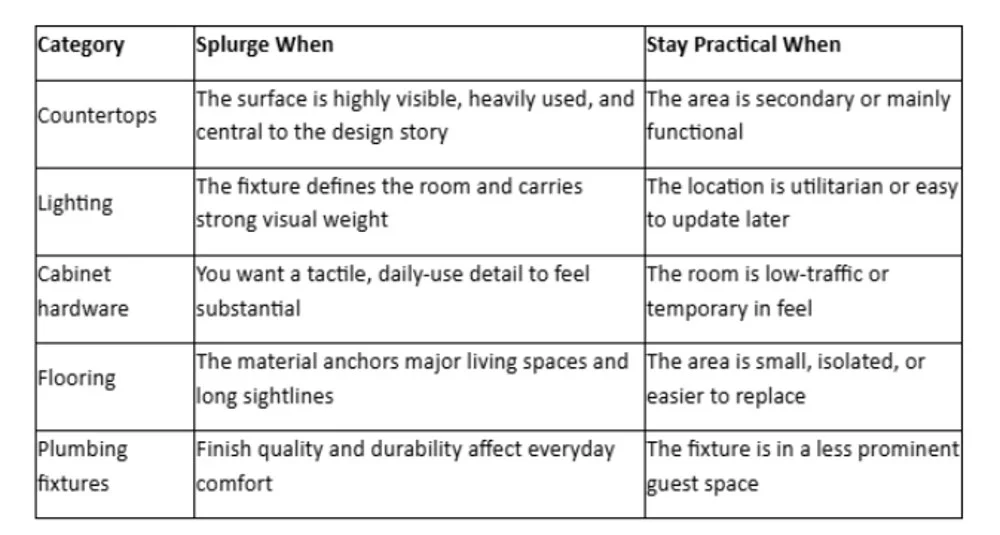
Not every finish deserves the same investment. Strategic prioritization lets you allocate allowance dollars where they'll have the greatest impact on your daily experience.
High-visibility finishes that shape daily experience
Some finishes you'll touch, see, or walk on every single day. These are the places where quality and personal taste matter most:
Kitchen countertops and backsplash. You'll prepare meals here, gather here, and notice these surfaces constantly. This is often the single most visible finish decision in the home. Organizations like the Natural Stone Institute offer guidance on selecting and caring for stone surfaces—useful context when evaluating material options.
Primary bathroom tile and fixtures. You start and end every day in this room. The shower tile, the faucet you adjust half-asleep, the vanity you lean against while brushing your teeth—these details register even when you're not consciously noticing them. The NKBA Kitchen & Bath Planning Guidelines provide authoritative standards for layout and fixture placement.
Flooring in main living areas. The floor connects every room. It's the backdrop for furniture, light, and daily movement. Quality flooring in high-traffic areas pays dividends for years.
Lighting in gathering spaces. Light shapes mood. The right fixtures in the kitchen, dining area, and living room elevate the entire atmosphere. For more on this, the article on luxury lighting choices explores how thoughtful lighting design transforms spaces.
Categories where performance matters more than prestige
Some finishes need to work well, but they don't need to carry the design. Utility rooms, closet interiors, and garage spaces rarely benefit from premium finishes. Durable and functional beats expensive and underappreciated.
Similarly, guest bathrooms see less daily use than primary suites. A clean, quality tile works beautifully here without requiring the same investment you'd make in the spaces you use constantly.
A framework for prioritizing
How to avoid overspending in low-impact areas
The risk isn't choosing bad finishes—it's allocating premium dollars to spaces that don't reward them. Before upgrading, ask: How often will I actually see or touch this? Will I notice the difference in six months?
If the answer is "rarely" or "probably not," that's a sign to stay practical and save the splurge for where it counts.
A Smarter Way to Shop Finishes Without Creating Budget Drift

Start with your non-negotiables
Before browsing showrooms or scrolling design sites, identify the three to five finish decisions that matter most to you. Maybe it's the kitchen countertop material, the primary bath tile, and the front door hardware. Maybe it's the wide-plank flooring you've wanted for years.
Starting with non-negotiables focuses your energy and your allowance dollars. Everything else becomes flexible—places where you can make practical choices without feeling like you compromised.
Track selections against allowances in real time
Budget drift happens when decisions accumulate without visibility. You upgrade the faucet, then the cabinet pulls, then the tile—and suddenly you're significantly over allowance without having made any single dramatic choice.
The antidote is real-time tracking. Know your allowance for each category. Log your selections as you make them. Compare running totals against limits before falling in love with the next upgrade.
This is where continuous estimating becomes essential. Builders who stay involved during the design phase can provide ongoing feedback, catching budget drift before it compounds.
Resolve upgrades before they ripple through the whole plan
An upgrade in one area often affects others. Heavier countertops may require reinforced cabinetry. Larger-format tile may need different substrate preparation. High-end fixtures may require specialized installation.
Resolving these ripple effects early prevents late-stage surprises. When your builder knows about upgrades before construction reaches that phase, they can adjust plans, pricing, and schedules accordingly.
This is also where a functional design plan matters. A finish doesn't live alone. It belongs to a room, a sightline, a material palette, and a budget sequence.
What to Ask Your Builder Before You Fall in Love With a Finish
The right questions reveal how much autonomy you'll actually have—and how transparent the process will be.
Can I shop beyond your preferred vendors?
This question cuts to the heart of allowance autonomy. If the answer is "no" or "only with restrictions," you'll want to understand why. Some builders have legitimate coordination reasons; others simply prefer the margin from exclusive vendor relationships. A builder who supports independent shopping is signaling confidence in their own value proposition.
How are credits, overages, and substitutions handled?
Understand the financial mechanics before you start selecting. If you come in under allowance, do you receive a credit? If you go over, when do you find out and how is the overage billed? If you want to substitute a different product after selections are finalized, what's the process and cost?
When do selections need to be finalized to avoid delays?
Timing matters more than most clients realize. Certain finishes have long lead times. Others need to be specified before framing is complete. Missing a selection deadline can delay the entire project. Ask for a selection timeline early so you can shop with purpose rather than scrambling at the last minute.
If one finish changes, what other parts of the plan might move with it?
Upgrades can create ripple effects. Understanding these connections upfront helps you make decisions with full awareness of their downstream impact.
Which categories are easiest to personalize without creating downstream complications?
Some finish categories offer more flexibility than others. Knowing where you have room to explore—and where constraints are tighter—helps you focus your creative energy productively.
Where do you recommend prioritizing budget for the strongest long-term impact?
A good builder has seen hundreds of finish decisions play out over time. Their perspective on where investment pays off most can be invaluable.
These questions do two jobs. They clarify the system, and they reveal whether the builder treats finish autonomy as a real planning tool or as a slogan. For more on evaluating builder transparency, the article on what design-build means provides useful context.
The Best Outcome: A Home That Feels Custom in Every Room
The emotional payoff of intentional finish choices
When you've chosen every finish with intention—weighing options, comparing sources, making real decisions—the completed home carries that investment. You don't just live in the house; you recognize your own judgment in every room.
The countertop isn't just a surface. It's the slab you chose after visiting three stone yards. The lighting isn't just illumination. It's the fixture you found at a design market and knew immediately was right.
This is what personalized luxury actually means: not the most expensive option, but the most intentional one. You're not trying to prove that every room is expensive. You're trying to make every room feel intentional.
Why the right builder makes autonomy feel safe
Freedom without structure creates anxiety. Shopping allowance autonomy works when it's paired with clear allowances, transparent tracking, and a builder who communicates throughout the process.
Another Hill Country client put it simply: "Thank you for your input when she struggled with uncertainty, yet allowing her to make choices on her own." That balance—guidance without control, support without restriction—is what makes finish selection feel empowering rather than overwhelming.
The journey from foundation to finishes involves hundreds of decisions. The finish phase should feel like the payoff for all that planning, not a new source of stress.
As you begin gathering inspiration for your custom home finishes, consider how your builder handles allowances, sourcing, and communication. The answers will shape not just your budget, but your entire experience of creating a home that feels unmistakably yours.
Explore how a design-build firm approaches finish selection—or learn more about what design-build means for homeowners who want both creative control and budget protection.
When your ideas are ready to be tested against real allowances and site realities, a Discovery Meeting is the natural next step.
Our Editorial Process
Our expert team uses AI tools to help organize and structure our initial drafts. Every piece is then extensively rewritten, fact-checked, and enriched with first-hand insights and experiences by expert humans on our Insights Team to ensure accuracy and clarity.
About the Riverbend Homes Insights Team
The Riverbend Homes Insights Team shares practical guidance for homeowners planning custom homes in Spicewood, Lake Travis, Lake LBJ, and the wider Texas Hill Country. Their work combines Riverbend Homes' design-build perspective, local site knowledge, and homeowner-first budgeting philosophy to help clients make confident decisions.