

What Spicewood Land Buyers Should Ask a Custom Home Builder Before Making an Offer
📌 Key Takeaways
A better Spicewood offer starts by checking whether the lot truly fits the home, access, utilities, and outdoor living.
Start With Vision: Bring your home goals first, because the lot only matters if it supports the life you want.
Test Likely Placement: Ask where the home could sit before you trust views, acreage, or online listing details.
Check Site Limits: Slope, shape, rock, and access can change foundations, driveways, drainage, pools, and construction plans.
Confirm Utilities Early: Water, septic, electric, internet, and propane can affect both budget and usable space.
Know Who Verifies: Builders can flag concerns, but professionals and authorities must confirm legal, utility, and permit questions.
Beautiful land still needs hard questions.
Spicewood land buyers will make clearer offers, using the builder questions and verification checklist that follows.
~ ~ ~ ~ ~ ~ ~ ~ ~ ~ ~ ~ ~ ~ ~ ~ ~ ~
A Spicewood lot can look ideal online or during a showing. The view works. The acreage feels right. The setting seems to match the custom home you have been picturing.
Before making an offer, the more useful question is not simply, “Can this lot be built on?” It is, “What should be checked before relying on this lot for the home, driveway, utilities, outdoor living, and access I want?”
A custom home builder cannot responsibly guarantee full buildability from one early conversation. Surveys, engineering, utility confirmation, septic review, HOA documents, title work, and permitting may still be needed. A builder can, however, help identify early concerns, better questions, and assumptions that should be verified before the offer process moves too far.
Before making an offer, ask about likely home placement, slope, access, utilities, outdoor living fit, and what must be confirmed by the right professional or authority.
Start With the Home You Want, Not Just the Lot You Like
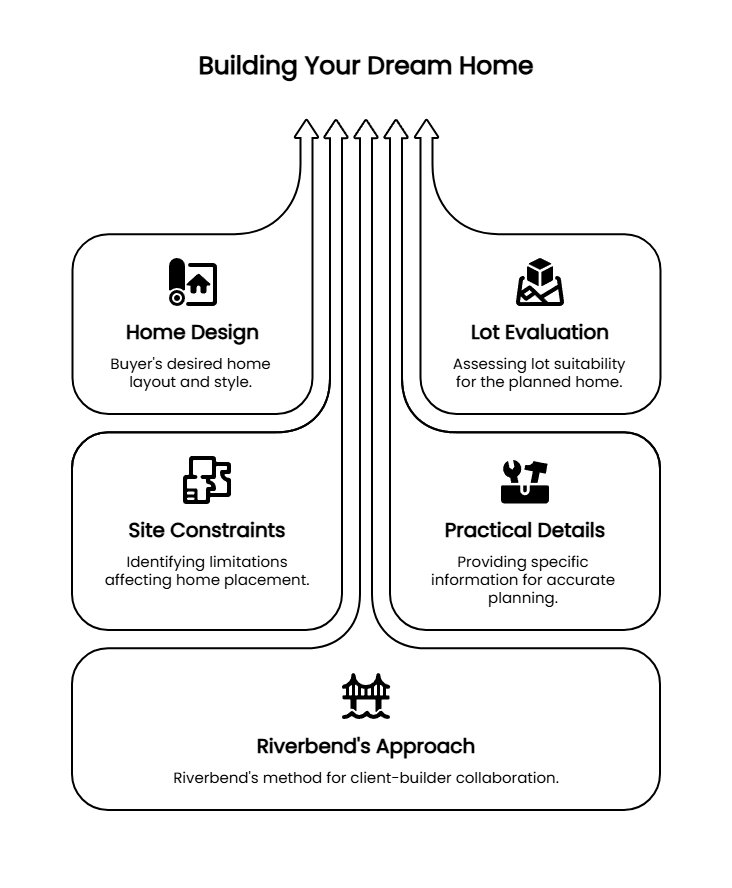
A pre-offer builder conversation should begin with the custom home vision, not only the land. Ask the builder: “Based on the home, driveway, outdoor living, and access I want, what should we look at on this lot?”
This matters because a homesite is not evaluated in the abstract. A lot that appears generous may become more complicated once the build envelope, driveway approach, septic area, drainage, easements, setbacks, and outdoor living priorities are considered together.
A build envelope is the area where a home may be able to sit after site constraints are accounted for. Site feasibility means the early review of whether the land appears to fit the intended home, access, infrastructure, and design goals. Neither term should be treated as a final approval before professional review.
Bring practical details to the conversation: inspiration photos, rough sketches, must-have rooms, preferred views, garage needs, outdoor living priorities, and any known documents from the listing. For example, a buyer who wants a single-level home, pool, guest suite, and sunset-facing patio should ask how the lot’s shape, slope, driveway access, and likely utility path may affect that vision.
Riverbend describes its Discovery Meeting as a property-based conversation focused on understanding the client’s vision, assessing site feasibility, and discussing infrastructure requirements that may affect budget and design.
Ask Where the Home Could Realistically Sit
The most beautiful part of a lot is not always the most practical place to build. Ask the builder: “Where could the home likely sit, and what would need to be verified before we rely on that assumption?”
A useful answer should discuss likely orientation, usable area, driveway approach, outdoor living space, and the documents needed for a clearer review. Those documents may include a survey, plat, restrictions, HOA documents, known easements, utility information, and listing materials. In many Spicewood communities, an Architectural Review Committee (ARC) dictates strict exterior requirements—such as mandatory masonry percentages, specific roof pitches, or approved color palettes—that can significantly impact your design and budget.
A survey can be a strong starting point, but it is not the same as a complete buildability answer. A survey may show boundaries and certain recorded conditions, while other questions may still require review by a surveyor, engineer, HOA, utility provider, septic professional, title professional, or relevant county authority.
Lot shape also matters. An irregular homesite may affect where the driveway can enter, how the home can face a view, and whether there is practical room for a pool, guest area, detached garage, or outdoor kitchen. That does not mean the lot is unsuitable. It means the placement conversation should happen before the floor plan feels locked.
Riverbend’s guide on what your Spicewood lot can really support expands on site-first planning before design.
Ask How Slope, Shape, and Access Could Affect Design Options
Slope is one of the easiest site traits to underestimate. A sloped lot may affect foundation approach, drainage planning, driveway design, outdoor living areas, and construction logistics. The impact depends on the specific property and should not be reduced to a generic rule. In the Hill Country, this often includes evaluating the depth and hardness of limestone rock, which heavily influences excavation costs for foundations, pools, and utility trenching.
Ask the builder: “What should we know about the slope before assuming this home plan will work here?” A careful answer may identify areas that appear more workable, areas that may need engineering input, or parts of the plan that could require adjustment.
Lot shape should be part of the same discussion. A narrow, angled, or unusually shaped homesite may still be usable, but it can change how the home, pool, driveway, septic area, and outdoor spaces relate to each other. Acreage alone does not tell the full story.
Access is also more than the finished driveway experience. It can affect construction staging, material delivery, equipment movement, and where the home can reasonably sit. Ask whether the likely driveway approach appears to support the design vision, and ask what driveway or access items must be confirmed separately.
For property-specific requirements, buyers should verify with the applicable authority rather than relying on general assumptions. Official sources such as Travis County’s single-family development permit resources, Burnet County Development Services, Blanco County’s Development department, and TCEQ’s on-site sewage facility information may be useful starting points, depending on the property’s jurisdiction and infrastructure needs.
A site-first custom home plan can help connect view, access, outdoor living, septic, and utilities before the design becomes too fixed.
Ask Utility and Infrastructure Questions Before You Assume the Budget
Utility availability should not be assumed from nearby homes, visible lines, or listing language alone. Ask the builder: “What utility and infrastructure information should be confirmed before we assume this lot fits the budget and design?”
The answer may involve electric service, water source, septic suitability, internet, propane, or other infrastructure. In rural Spicewood, this often means confirming whether the lot ties into a municipal water system or requires drilling a private well—and whether that well will yield enough water for your household. The builder can help identify which questions matter, but availability and requirements should be confirmed through the correct provider, authority, seller documentation, or qualified professional.
Septic and water questions are especially important because they can affect usable space. A septic area, water source, easement, utility route, or drainage concern may compete with the same part of the lot where the buyer hopes to place a pool, patio, guest suite, or driveway. Given the shallow, rocky soil common in the Hill Country, many lots require aerobic septic systems with dedicated spray fields, which demand a larger footprint than traditional gravity systems.
This is where early builder input has practical value. The builder can help the buyer understand which infrastructure unknowns may affect design direction or budget assumptions. That is different from saying the builder can confirm every utility, septic, or permitting answer before formal review.
Riverbend’s article on site feasibility before design discusses why land conditions should be considered before plans feel final.
Ask What Must Be Verified by Someone Other Than the Builder
A responsible builder conversation should include clear limits. Ask: “What can you flag from a site walk, and what would you want verified before offer deadlines or contingencies?”
Builder input is valuable because it connects site traits to design and construction questions. It is not a substitute for legal, financial, engineering, surveying, septic, utility, HOA, title, or permitting review.
Spicewood may involve different county contexts, so the safest approach is to confirm the specific property’s jurisdiction before relying on any procedural assumption. The question is not, “What applies to every Spicewood lot?” The better question is, “Who needs to confirm this for this property?”
| A builder may help flag | What may still need verification |
|---|---|
| Likely home placement concerns | Survey, plat, setbacks, easements, restrictions |
| Slope, drainage, and access questions | Topographic survey, engineering, driveway/access requirements |
| Utility and infrastructure questions | Utility providers, water authority, septic authority, seller documentation |
| Outdoor living and pool fit concerns | Setbacks, septic area, drainage, easements, HOA rules |
| Construction access concerns | Site-specific access rules, fire/access requirements, professional review |
A useful builder answer may sound cautious: “This looks worth exploring, but verify the easement,” or “The driveway approach should be reviewed early,” or “Do not assume utilities are available until the provider confirms them.” That kind of answer is helpful because it separates possibility from confirmation.
Use This Pre-Offer Builder Question Checklist
Use this checklist before your next builder, agent, or due-diligence conversation. It is a preparation tool, not a DIY approval tool.
| Ask the Builder | Why It Matters | What May Need Verification |
|---|---|---|
| Where could the home likely sit? | Tests whether the lot appears to fit the desired placement, orientation, and usable area. | Survey, setbacks, easements, HOA documents, restrictions. |
| What site features could affect driveway access? | Access may affect design, construction planning, and daily use. | Driveway rules, fire/access requirements, culverts, relevant authority review. |
| What should be reviewed about slope? | Slope may affect foundation approach, drainage, driveway design, and outdoor living. | Survey, topography, engineering, geotechnical or professional review. |
| What utilities should be confirmed? | Utilities and infrastructure may affect budget assumptions and design decisions. | Utility providers, water/septic authorities, seller documentation, property-specific confirmation. |
| Can the lot support outdoor living priorities? | Pools, patios, view orientation, guest space, and outdoor kitchens need usable space. | Setbacks, septic area, drainage, easements, HOA rules, engineering. |
| What should be verified before offer deadlines? | Helps prioritize the checks that matter before contingencies or deadlines arrive. | Relevant professionals, authorities, providers, HOA, surveyor, engineer, or septic professional. |
Riverbend’s article on lot checks before your dream home is drawn can also help organize these early site questions.
When to Bring a Builder Into the Conversation
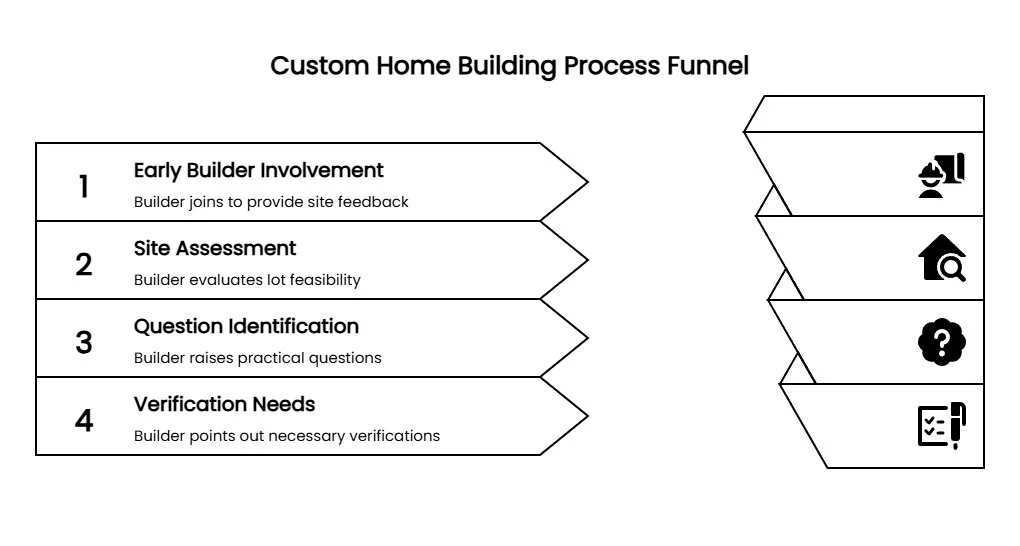
Bring a builder into the conversation early enough to shape the questions, not after the design is emotionally fixed. Once a buyer has already committed mentally to a specific floor plan, pool location, driveway route, or view angle, site feedback can feel like a problem instead of useful information.
A pre-offer conversation is most helpful when the buyer has a vision but still has room to adapt. The builder can walk the site with that vision in mind, identify practical questions, and point out what should be verified before the buyer relies on the lot.
Riverbend describes its work as building luxury custom homes in the Spicewood and Lake Travis areas. Buyers looking for custom home builders in Spicewood can use a property-focused conversation to connect early design goals with site-fit questions. Learn how Riverbend’s Discovery Meeting helps connect vision to site feasibility and infrastructure questions.
FAQs About Asking a Builder Before Buying Land in Spicewood
Should land buyers talk to a builder before making an offer?
It can be useful when there is already a custom home vision. A builder may help identify site-fit questions before the buyer commits, while formal verification may still be needed.
Can a builder tell whether a lot is buildable before purchase?
A builder can often flag concerns and questions, but should not guarantee buildability without proper due diligence, surveys, engineering, utility confirmation, septic review, and approvals.
What documents should be brought to a pre-offer builder conversation?
Helpful documents may include the listing, survey or plat if available, restrictions, HOA documents, utility information, photos, and a rough list of what the buyer wants to build.
What utility questions should be asked before buying land?
Ask what utilities appear to be available, what needs confirmation, and whether septic, water, electric, internet, propane, or other infrastructure may affect budget and design. Property-specific availability should be confirmed with the appropriate provider or authority.
How does slope affect a custom home lot?
Slope may influence home placement, foundation approach, driveway design, drainage, outdoor living, and construction access. Avoid relying on exact slope thresholds unless the property has been professionally reviewed.
A Better Offer Starts With Better Questions
The goal is not to get every answer before making an offer. The goal is to know what to ask, what may affect the home you want, and what should be verified before relying on an assumption.
A good builder conversation can help turn a beautiful lot into a clearer decision framework. It can also show where the buyer needs a surveyor, engineer, utility provider, HOA representative, county authority, septic professional, or other qualified professional before moving forward.
Have questions about a Spicewood lot before making an offer? Contact Riverbend Homes to start a property-focused conversation.
Disclaimer: This article is for general informational purposes only. It is not a substitute for advice from a qualified professional, provider, or official source relevant to your situation. Always verify important decisions with the appropriate expert, authority, or service provider.
Our Editorial Process
Riverbend Homes content is created to help Texas Hill Country homeowners make clearer, calmer custom-home decisions. The editorial process begins with Riverbend's documented building process, local experience, client-facing materials, and verified internal resources. Drafts are reviewed for practical accuracy, plain-language usefulness, local relevance, and alignment with Riverbend Homes' site-first approach before publication.
By Riverbend Homes Editorial Team
Riverbend Homes is a second-generation family-owned custom home builder serving Spicewood, Lake Travis, Horseshoe Bay, Lake LBJ, and the Texas Hill Country. Since 1996, Riverbend Homes has focused on listening closely, building selectively, staying involved on site, and helping families turn custom-home visions into well-planned homes.